OpenAI Reconsidered Token Pricing After Developers Asked for Clearer AI Bills
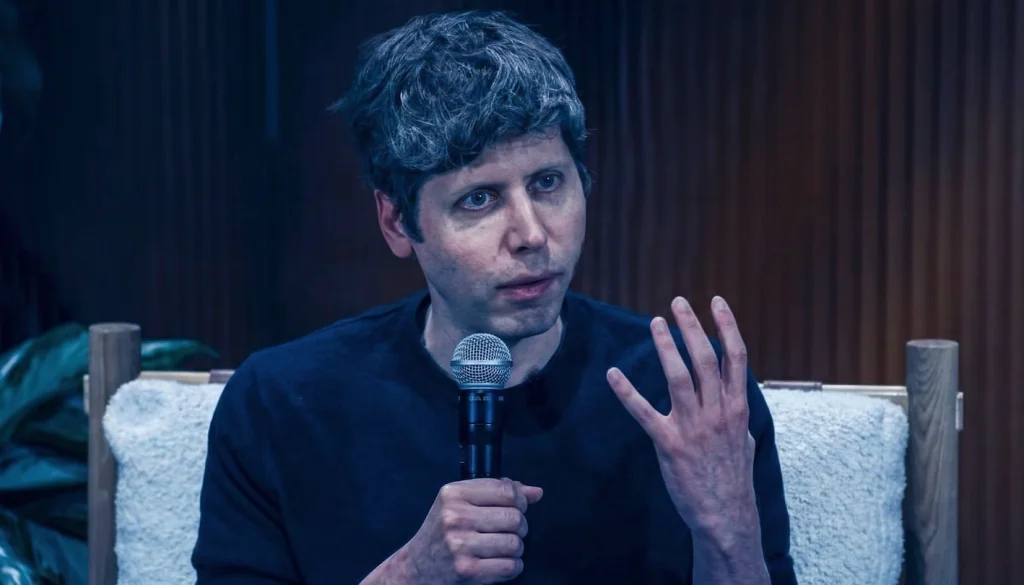
For OpenAI, token pricing has an awkward tradeoff: the unit is a poor measure of useful AI work, but it gives developers a way to see how charges accumulate. CEO Sam Altman says the company considered replacing it for its next model with a per-prompt price. Customer feedback stopped that plan.
A bill for the job
Altman described the proposal during a Thursday conversation with Stripe President John Collison on the Cheeky Pint podcast. Developers would send OpenAI a prompt, then receive a price for the work, with billing modeled on AWS: “you just do something and we send you a bill.”
Altman called abandoning token pricing “what would’ve been a bad call.” He didn’t identify the model or say when OpenAI considered the change. The discussion is cued up below:
Why developers wanted the meter
OpenAI tested customer reactions to a bill that showed a price without explaining how it was calculated. The response, Altman said, was “so negative.” Customers wanted to know what they were paying for.
“I need to know what I’m paying for somehow.”
That demand reflects a practical part of running AI products. Developers already monitor input and output tokens to control spending and estimate how it will change with usage. A single charge for a completed task could make those costs harder to trace.
Altman said some people he consulted would accept paying more for the same output if charges remained tied to a consistent token count. As he recalled their view: “much rather you inflate the tokens and pay more” because “I know there’s a real thing there.”
His explanation is that buyers may distrust a price they can’t inspect, fearing they’ll “get screwed somehow” over time. The preference echoes older computing models in which customers paid for CPU hours rather than a finished job.
Agent costs make the question harder
Per-task pricing might seem appealing for agents, whose multistep workflows can consume unpredictable amounts of compute. Yet developers already have trouble forecasting those workloads with token billing. A flat price could simplify the bill, but Altman didn’t explain how OpenAI would calculate it or how customers could compare charges across tasks.
That leaves a larger product question: should AI services charge for the resources they consume, or for the outcome a user requests? Token counts are visible, but they don’t map neatly to the value or difficulty of a task. A price per job could be easier to understand only if customers can trust how it’s set.
Tokens are an imperfect measure
The pricing debate began with Collison asking whether tokens are the right way to measure AI usage. Altman acknowledged their shortcomings, calling them “a kind of fake unit” that is “real in some sense, but they’re not a good unit.” He had no clear replacement to propose.
“Tokens are a kind of fake unit … they’re real in some sense, but they’re not a good unit.”
Altman dismissed Collison’s half-serious suggestion of an “intelligence-equivalent” token, comparing it with chipmakers’ nanometer figures, which no longer correspond to a physical measurement on the chip.
Model selection adds another layer of work. Developers must weigh cheaper systems against more capable ones and predict how much reasoning a task will need. Altman described that decision-making as “cognitive overhead” that “doesn’t actually add any value.”
OpenAI still charges by the token, even as Altman has argued that the cost of a given level of AI falls roughly tenfold each year. His account points to the tension the company has yet to resolve: token billing exposes a measurable unit, while any simpler alternative must give developers confidence in how each price is formed.
The post Sam Altman almost scrapped token pricing. Here’s why he backed off. appeared first on The New Stack.