Apple Fitness+ Gym Strength Adds Adaptive Plans and Apple Watch Logging
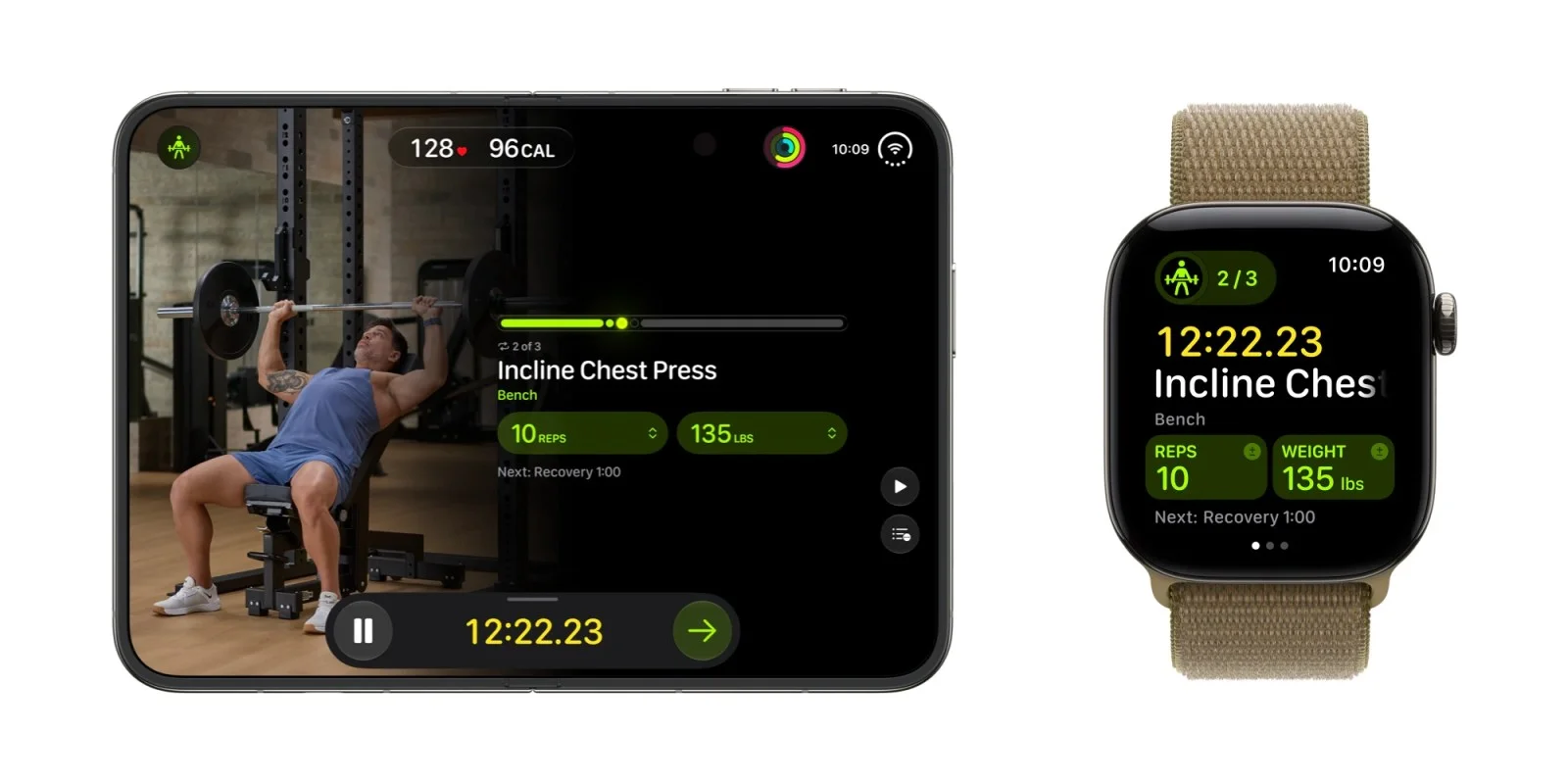
Apple Fitness+ is bringing its guided workout approach into the weight room with Gym Strength, a feature now available in beta. It builds lifting plans around a user’s goals, experience, schedule, and available equipment, then adjusts later workouts based on recorded reps and weight. An Apple Watch can handle exercise and set logging from the wrist, though the watch isn’t required to use the feature. The pitch is familiar: make a structured training plan easier to follow, while leaving room to change it when real gym conditions get in the way.
Plans that adapt to your training
Gym Strength organizes training into progressive four-week plans. To set one up, users choose their goals and experience level, select workout days and target body areas, and identify the equipment they can access. The plan then gives each session a defined structure, with the next week’s workouts adjusted according to the reps and weight logged during the previous week. That feedback loop is the feature’s central idea: a plan should respond to what someone actually completed, rather than assume every session went exactly as scheduled.
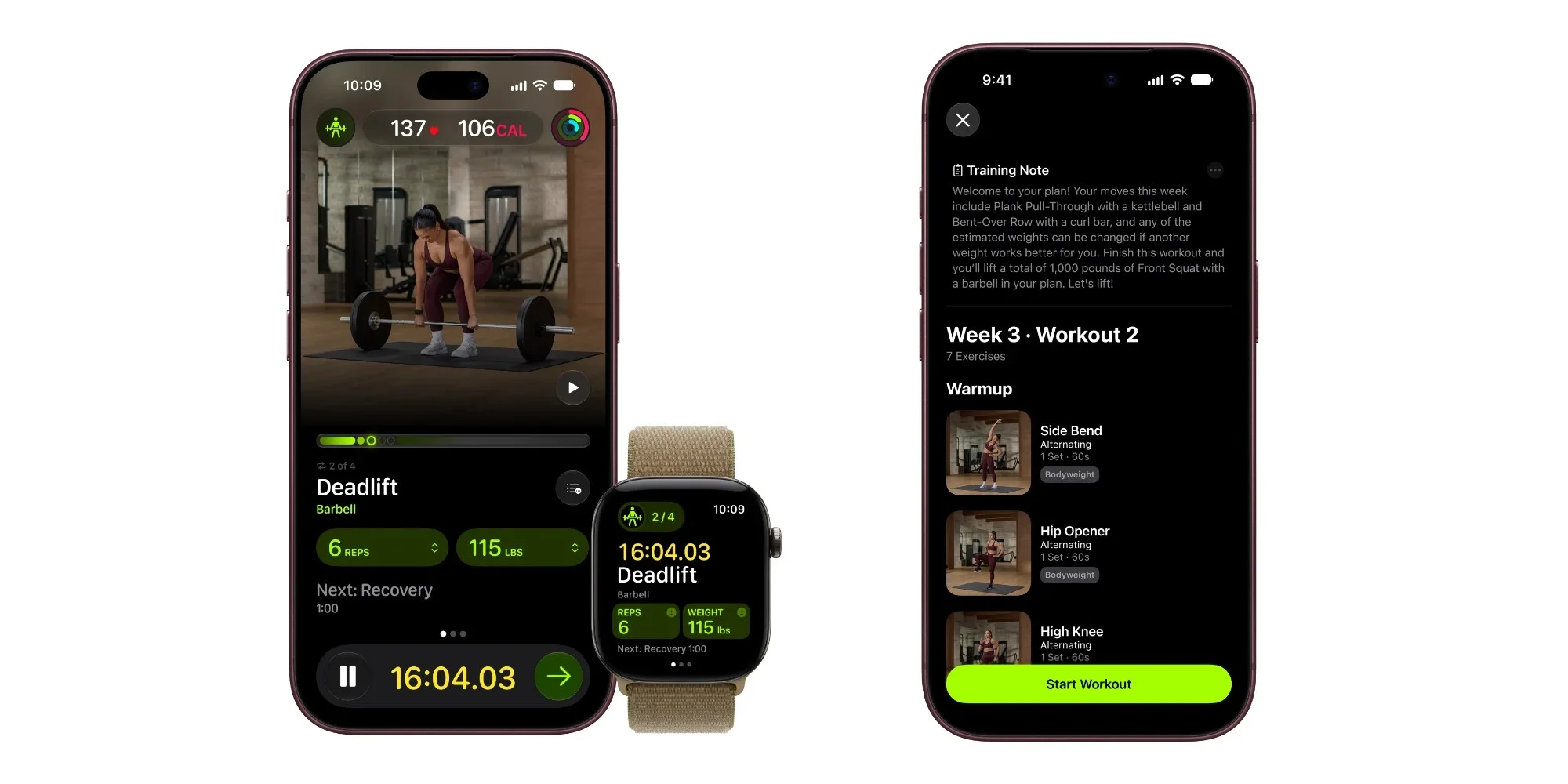
Users can choose between shorter and longer sessions. Five exercises are estimated to take 20–30 minutes, while seven are estimated at roughly 45–60 minutes. Each workout lists exercises, sets, reps, and a suggested weight, so the session has enough detail to guide a lifter through the work. At the same time, users can move at their own pace. The estimates are a planning aid, not a promise about how long a workout will take; rest periods and the pace of a busy gym can change that.
Exercise guidance comes through short videos featuring Fitness+ trainers. Users can expand each demonstration to see the movement from three angles, which gives them a visual reference as they work through the session. That may help make an unfamiliar exercise easier to follow, but video guidance still depends on the user translating what they see into their own movement. The practical value is straightforward: the instructions and the workout plan sit together, reducing the need to search separately for a demonstration.
Apple says the beta covers more than 350 exercises and over 30 equipment types, including dumbbells, kettlebells, suspension trainers, cable machines, and barbells. Dumbbells are the minimum requirement, which sets a clear baseline for who can use the plans. The equipment choices also acknowledge that a training setup can vary: someone may have access to a fully equipped commercial gym, while another person may be working out at home with a smaller selection. A plan built around the equipment a user says they have is more likely to be usable from the start.
Gym conditions change, and the feature lets users swap equipment or choose a similar exercise focused on the same movement and body area. Sets can also be added, and exercises skipped. Those controls matter because equipment availability, time, and energy don’t always match a plan made in advance. Here's the thing: adaptation is only useful if it stays easy to understand. Apple’s description suggests users can make practical substitutions while keeping the workout’s focus intact, though the beta’s breadth of exercises doesn’t by itself tell us how well every substitution will fit an individual’s training needs.
Apple Watch logging and service requirements
Gym Strength requires an iPhone with iOS 27.3 or an iPad with iPadOS 27.3. An Apple Watch running watchOS 27.3 is optional, and can display exercises, record reps and weight, and track heart rate and calories burned. That split gives users a way to follow the plan without owning a watch, while wrist-based logging can make it easier to record a set during a workout. If you're working in this space, the distinction is familiar: the phone or tablet provides access to the feature, while the wearable adds a more immediate way to interact with it.
The feature also adds Training Note, an optional Apple Intelligence feature that previews upcoming workouts, explains progression, and calls out milestones. It requires an Apple Intelligence–enabled iPhone or iPad set to English. The feature is meant to add explanation around a plan’s progression, rather than simply present the next list of exercises. Its usefulness will depend on whether those notes help users understand what’s changing and why; the description gives the intended role, but doesn’t establish how detailed or personalized the guidance will feel in practice.
Gym Strength comes with an existing Fitness+ subscription, which also includes trainer-led sessions across 12 workout types. Those include strength, HIIT, yoga, Pilates, cycling, rowing, dance, and treadmill workouts, alongside guided meditations, personalized recommendations, and Custom Plans for scheduling workouts. Apple says new sessions are added every week. Gym Strength therefore joins a service built around several kinds of activity, rather than standing alone as a dedicated weight-training product. That breadth may appeal to people who want strength sessions alongside other workouts, but it also means the value of the subscription depends on how much of the wider catalog they’ll use.
Apple Fitness+ costs $9.99 per month or $79.99 per year in the U.S. A subscription can be shared with up to five other family members, and new subscribers get a one-month trial. Eligible device purchases include a three-month trial. These terms put the new feature inside an existing paid service, so Gym Strength doesn’t come with a separate price listed here. For people who already subscribe, it adds another way to use Fitness+; for someone considering the service for lifting plans alone, the broader catalog and trial period are part of the calculation.
Fitness+ is also part of Apple One Premier, which costs $39.95 per month in the U.S. and includes Apple Music, Apple TV, Apple Arcade, Apple News+, and 2TB of iCloud+ storage. That bundle places Fitness+ among several Apple services, making Gym Strength an added feature within a larger subscription for customers who already use the package. It doesn’t change the workout feature itself, but it does affect how some users may encounter it: as part of a bundle they already pay for, rather than as a standalone fitness purchase.
What Gym Strength could mean for Fitness+
Gym Strength extends Fitness+ from guided classes into a more self-directed kind of training. Its plan structure, logging, and equipment substitutions address common friction points: choosing what to do, tracking what happened, and adapting when a machine or weight isn’t available. This is more significant than it looks for a service whose existing appeal centers on trainer-led sessions. A plan that changes with recorded performance asks users to return to the feature and log their work; that makes the quality of the adjustments as important as the size of the exercise library.
And yet. A four-week plan and a set of suggested weights can organize training, but they can’t guarantee that the plan will suit every user or that each session will unfold as intended. Apple’s description emphasizes flexibility, including swaps, added sets, and skipped exercises, while the beta label signals that the feature is still being introduced. (And this is the part most people overlook.) The feature’s promise rests partly on routine: users need to record enough of their workouts for the next plan to respond to their actual performance.
For readers already using Fitness+, Gym Strength could make the service more useful between trainer-led sessions, especially if they want a recurring structure for lifting. For others, the requirements and subscription price will shape whether the feature fits their setup. The numbers here are underwhelming as a standalone pitch if all someone wants is a list of exercises; the stronger case is a guided plan that adjusts over time and sits alongside the rest of Fitness+. How well that case holds up will depend on the experience of using the beta.
Do more with your Apple products
AirPods 5 | Apple’s newest wireless headphones
Apple AirTag 2 | Add Find My tracking to keys, bags, bikes, more
AirPods Pro 3 | Apple’s best wireless headphones


FTC: We use income earning auto affiliate links. More.