Binance Heist Traced to Fake Homebrew Install and Developer Job Scam
The Binance theft points to a familiar weakness in software security: attackers can reach valuable systems by persuading the right engineer to run code. Binance says its wallet infrastructure was targeted through two social engineering efforts, beginning with a fake Homebrew installer and later escalating to a phony job interview. The company says hackers stole $6.3 billion from its wallets, while it froze nearly $3 billion.
That account makes the reported attack notable for its scale, not for a novel exploit. The methods described are well-worn, and the first step appears to have taken place on an Apple silicon Mac. Binance’s public breakdown doesn’t name macOS, but its malware targeted /opt/homebrew, the standard Homebrew location on Apple silicon Macs.
Two encounters, months apart
Binance says the first incident happened in June. A DevOps engineer working on Wallet searched for an AI coding tool and downloaded a malicious Homebrew installer from a search engine. The company says it detected the activity early and prevented damage. But the attackers may still have learned which employees worked on wallet systems.
A second engineer, also working on Binance wallets, was approached months later with a fake job interview. The supposed employer asked the engineer to complete a coding assignment on a work computer. Binance says this activity went undetected. On October 29, the company disclosed that attackers had taken billions from its wallets. North Korean hackers have been widely speculated to be responsible, though the available account doesn’t establish that attribution.
The sequence suggests a patient operation: an initial foothold helped identify relevant staff, then a tailored pretext persuaded a wallet engineer to run code. Binance hasn’t published enough technical detail to show exactly how the second stage led to the theft, so the public explanation leaves key questions unanswered.
Search results and trust were part of the attack surface
The fake installer echoes earlier campaigns that used misleading Homebrew ads in Google Search to distribute Atomic Stealer to Mac users. Binance only says its engineer found the download through “a search engine,” so it hasn’t confirmed that an ad was involved. Still, the resemblance is a reminder that developers can encounter malicious downloads while looking for ordinary tools.
The broader lesson is less about one operating system than about how trusted workflows can be turned against their users. Engineers routinely install packages, run scripts and complete coding exercises. A convincing request can blur the line between normal development work and an attacker’s instructions, particularly when the target believes a job opportunity is at stake.
Warnings have limits
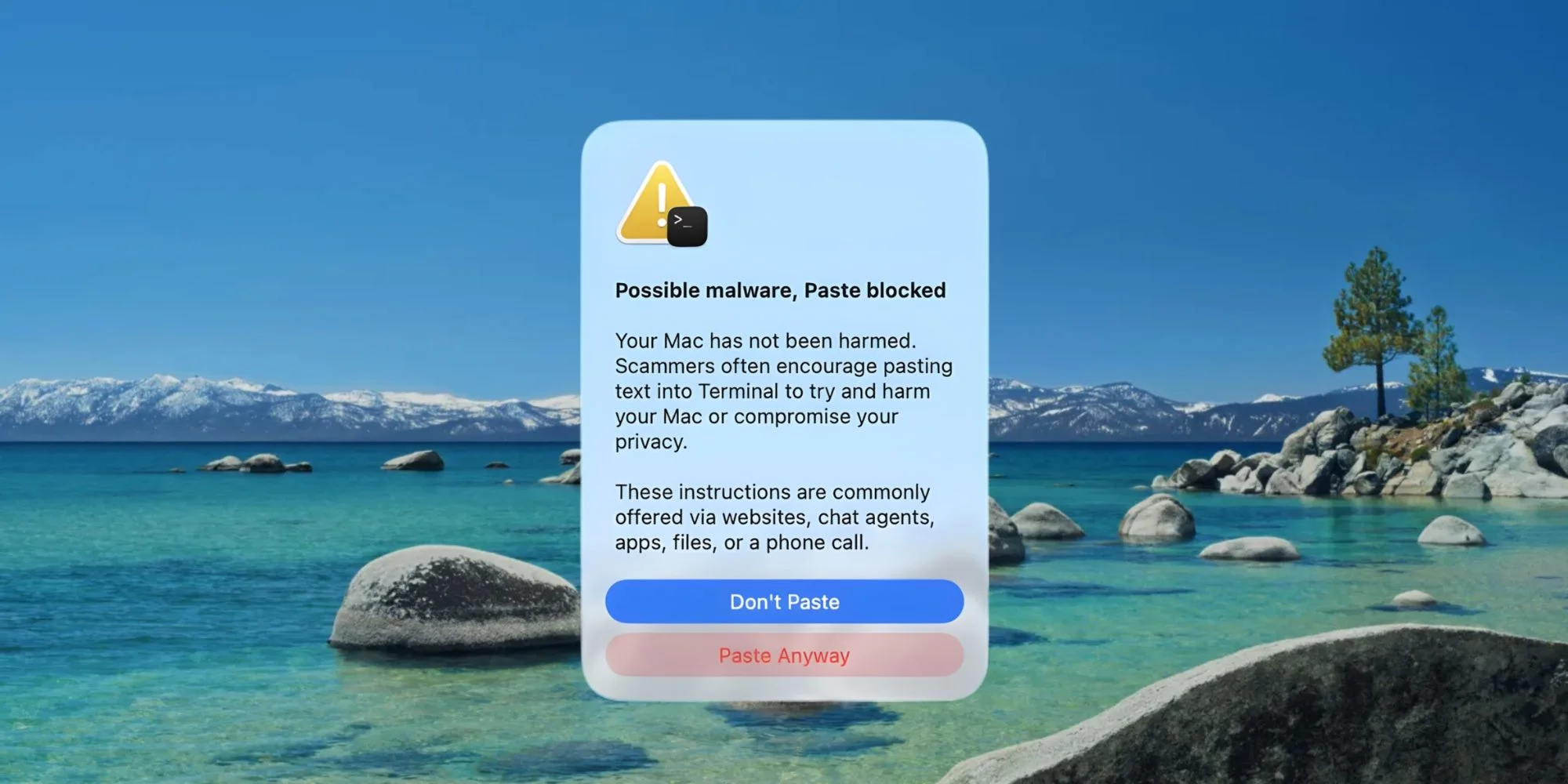
macOS 26.4 introduced warnings when users paste certain content into Terminal. Such prompts could help in some situations, but they can’t reliably stop an engineer who believes a command is part of a legitimate assignment. Technical safeguards matter; so do clear procedures for reviewing unfamiliar code and handling tests on work devices.
The warning interface is shown below:
Security researcher Christopher Lopez, who previously flagged the possibility that the attack began on a Mac, has pointed to a relevant precedent: the $1.5 billion Bybit heist, which also began on a developer’s Mac. Macs are common among DevOps and cryptocurrency teams, and they’ve been targeted by malware and social engineering campaigns in recent years.
The Binance incident also raises questions for Apple, though no platform warning can prevent every user from running a script they believe they need. The useful takeaway for engineering teams is practical: treat search results and unsolicited coding assignments as potential entry points, especially when they involve commands or software on a work machine. The attackers didn’t need a zero-day to make a high-value target trust the wrong instructions.
Lopez is scheduled to discuss the Binance attack on the Security Bite Podcast.
Security Bite is 9to5Mac’s weekly deep dive into the world of Apple security. Each week, Arin Waichulis covers threats, privacy concerns and vulnerabilities across Apple’s ecosystem. Every other week on the Security Bite Podcast, he talks with experts about current security issues.


FTC: We use income earning auto affiliate links. More.


