GitHub Copilot Fusion Automates Model Routing for Coding Tasks
GitHub Copilot Fusion puts model choice and coordination behind a single coding workflow. The practical bet is that developers can spend less time matching tasks to models while keeping control over how much effort the system applies.
Announced Wednesday at GitHub Universe in San Francisco and generally available now, Fusion brings together runtime orchestration from Project HydraFusion and Copilot Auto Model Selection. GitHub frames the launch as part of a broader plan to make GitHub “the most comprehensive software delivery system in the world,” with developers setting direction and reviewing outcomes while Copilot handles model decisions.
Routing decisions move into the workflow
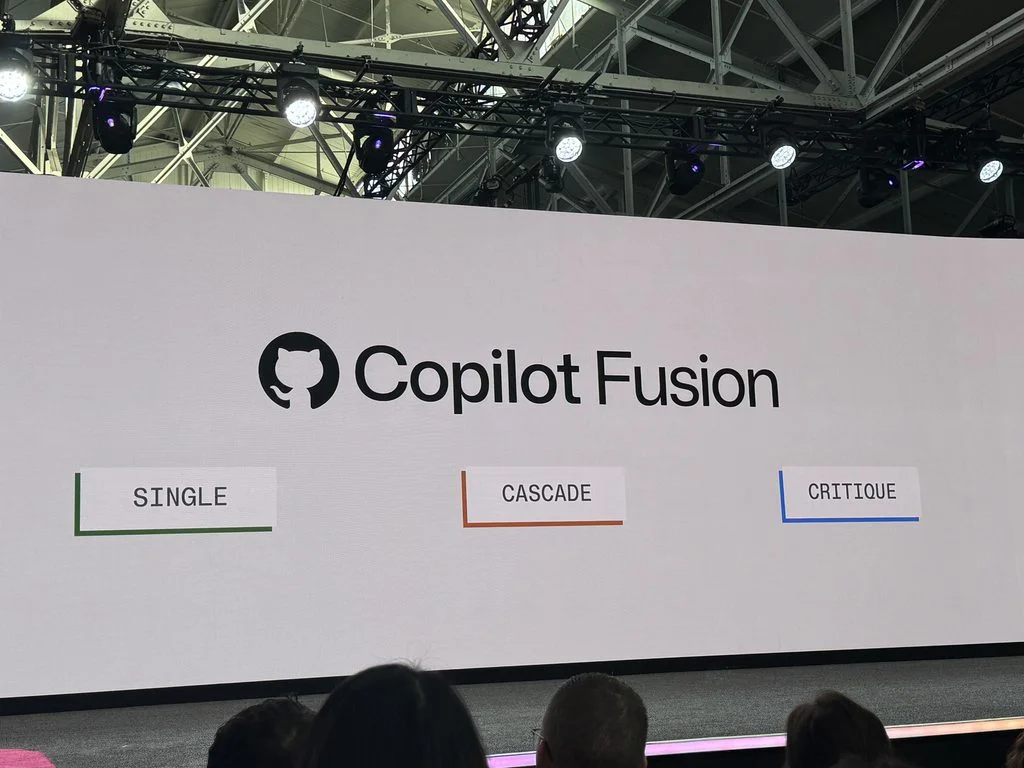
Fusion assesses whether a coding request calls for reasoning, code generation, debugging or tool use, then chooses a model and determines how to proceed. One model may handle the full task. Alternatively, Fusion can use a cascading flow, in which a quality check accepts a result or escalates it, or a critique flow, where one model reviews another’s output.
That flexibility addresses a familiar inefficiency: developers may select a powerful model for difficult work and forget to switch to a cheaper option for routine tasks. Hari Pokhrel, principal software engineer at AT&T, told GitHub that developers “would often choose a more powerful model for a complex task and forget to switch back for everyday activities.” Fusion is designed to make those choices dynamically, including shifts between models during a task.
For teams, the value will depend on whether automatic routing makes good choices across their actual workloads. GitHub’s pitch is that the system can balance capability, speed and cost without asking developers to tune each request themselves.
Effort levels and enterprise controls
Developers still choose an effort setting. Fusion Standard targets everyday coding, Fusion High is intended for harder tasks and deeper reasoning, and Fusion Max is aimed at the most demanding work. That leaves users with a broad control over how much effort to request while the system manages model selection and orchestration.
Enterprise administrators can limit which models Fusion may select, set each model’s policy independently, and decide whether Fusion is the default for Copilot users. A model can be blocked from Fusion’s selection pool without being disabled for the wider development team.
Benchmark gains come with cost claims
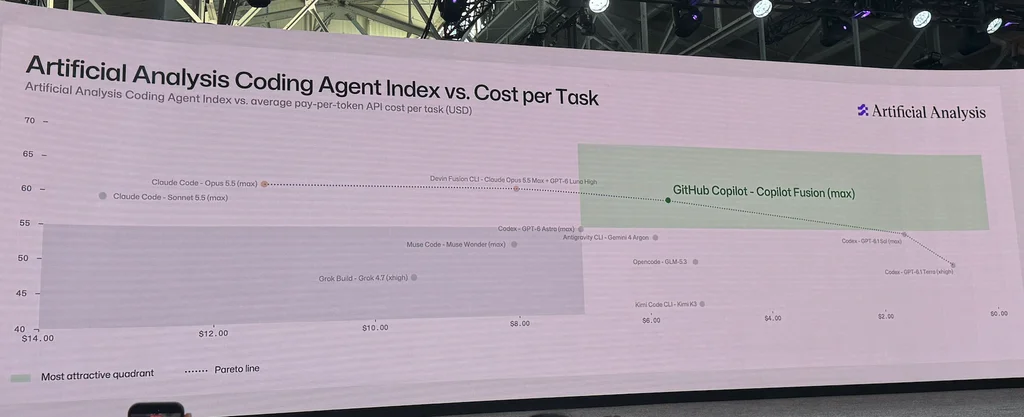
GitHub says Fusion has improved since Project HydraFusion entered research preview in September 2026. On the Artificial Analysis Coding Agent Index, the company reports a score of 60 for Fusion Max, within two points of Claude Code running Opus 5.5 Max.
GitHub also says Fusion Max achieved that result at about half the average API cost per task, using roughly half as many tokens and completing tasks about 40% faster. Those figures make the orchestration layer’s value measurable, though they remain GitHub’s reported results. Pokhrel said Fusion Standard has helped AT&T improve token efficiency, curb unnecessary spending and preserve capacity for higher-value work.
A broader shift toward automatic routing
Fusion arrived alongside other GitHub announcements, including the GitHub Copilot app, Copilot Projects and Copilot Automations. Its approach also reflects a wider move to make model routing a default feature: Ramp has described bringing model selection into its Open SWE coding agent, while Replit made its intelligent routing system the default across accounts.
The useful test for Fusion will be how reliably it chooses the right model and workflow across everyday engineering tasks. If that holds up, developers may spend less attention on model menus and more on defining the work and judging the result.
The post GitHub debuts Copilot Fusion, a new model selection & orchestration system that beats Claude Code for half the API cost appeared first on The New Stack.