GitHub Rebuilds Its Platform for AI Agents as New Rivals Emerge
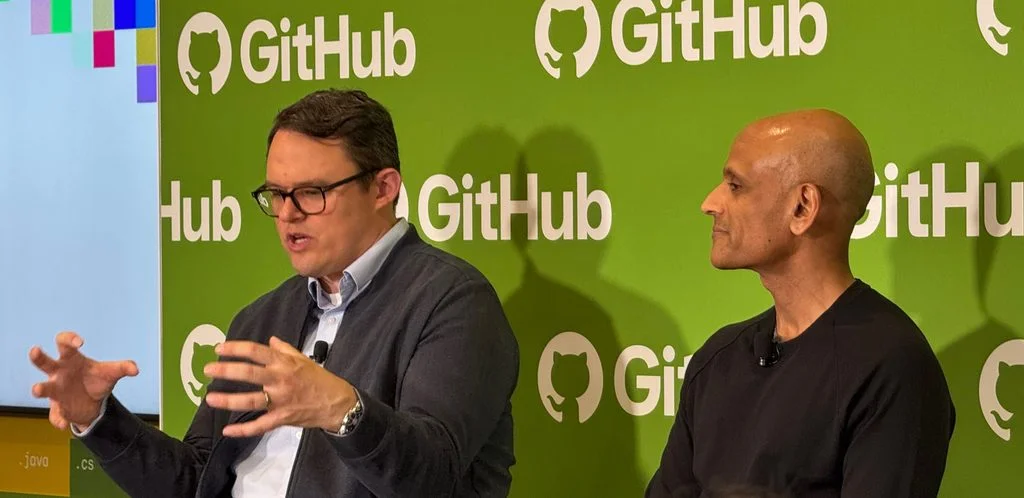
GitHub’s challenge in the agent era is bigger than adding server capacity. AI agents interact with developer platforms differently from people, pushing services into failure patterns that infrastructure teams didn’t expect. At Universe ’26 in San Francisco, GitHub leaders described a wide rebuild underway—and made the case that the company’s scale and shared developer community still matter as new alternatives appear.
The company says it is adding 4 million cores and 160 petabytes of storage, alongside a major rearchitecture of its backend. Those changes address a platform serving more than 225 million developers, but they also reflect a shift in what GitHub must support: more automated activity, changing traffic patterns and a mix of tools chosen by developers and organizations.
That shift is unfolding as the company faces new competition. Former GitHub CEO Thomas Dohmke launched Entire, a GitHub alternative, days before the conference. At a press conference, COO Kyle Daigle was asked about Entire and Microsoft’s M12 investment arm funding it. His response was measured: Microsoft backs tools that can compete with GitHub and with other Microsoft products, he said, and considers that healthy.
“I don’t think the world needs a new GitHub.”
—GitHub COO Kyle Daigle
Daigle’s point isn’t that developers have no reason to try other platforms. He said there may be a need for different tools, while arguing that GitHub’s job is to evolve for agent driven development. “The stats for the Git layer that we showed today kind of speak for themselves,” he said.
GitHub’s case for scale
Daigle framed GitHub’s role as broader than hosting code for companies. The service spans solo developers, major open source projects and Fortune 100 businesses. He argues that many challengers focus on one slice of that audience, often enterprise customers, rather than bringing developers together across those groups.
GitHub has never been the only place to host Git repositories or source control, Daigle noted, pointing to long established alternatives such as Perforce. The distinction he sees is the breadth of GitHub’s community and the ability to serve varied users on one platform. In his view, building a tool for a narrower set of customers is a different undertaking from recreating that shared environment.
He compared the current wave of developer tools with the period after zero interest rates, when many capable products tackled narrowly defined problems. Some of their creators eventually joined GitHub, he said, and contributed to its work. His remarks position competition as familiar, even as AI changes the demands on the platform.
Entire puts the community question back on the table
Dohmke offered a direct rebuttal to Daigle’s view. “GitHub may not think there needs to be a new GitHub, but developers clearly do,” he said in a statement to The New Stack. He described Entire as an effort to build an open source home for the community that can scale and operate across multiple regions.
His argument centers on who should provide the foundations for software development and open source. That question gives the competition a wider frame than a feature comparison: GitHub’s scale is an advantage, but its size also makes the company’s stewardship of a shared platform part of the debate.
GitHub EVP of CoreAI Jay Parikh emphasized the value of community as software creation changes. Developers benefit from sharing work and learning together, he said. He also distinguished between standalone products and platforms: GitHub and Microsoft build both, but a platform can support a complete workflow while letting users select individual parts.
Daigle described that choice as a core expectation. GitHub can offer an end to end flow or provide the underlying pieces for companies that want to assemble their own. “Everyone’s interested in what is the one way to do this, but nobody wants to buy the only way,” he said.
Agent activity changes the infrastructure math
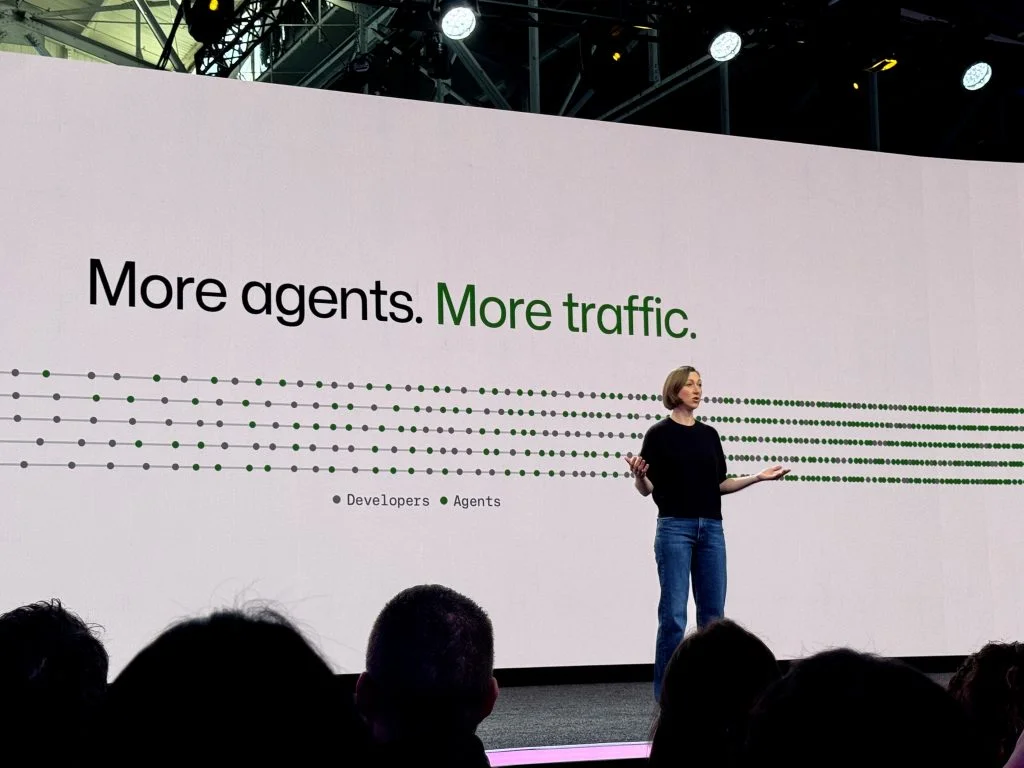
Agents have exposed weaknesses in services that GitHub believed were scaling well. Daigle said unexpected failures began appearing in early summer. Because agents behave differently from human users, some components that had performed reliably started to fail in surprising ways.
That makes capacity additions only part of the response. GitHub is also rewriting core services whose assumptions no longer fit the workload. Parikh, who previously worked on infrastructure at Facebook and Akamai, said small optimizations can be short lived at the current growth rate. A five or ten percent improvement may buy only a week or two before demand catches up.
The team has to change the system while keeping GitHub available and supporting existing workflows. The bottleneck also moves as one resource is optimized: a CPU constraint can give way to pressure elsewhere. Parikh said the company is using staged rollouts, testing changes and adjusting as traffic patterns reveal new limits.
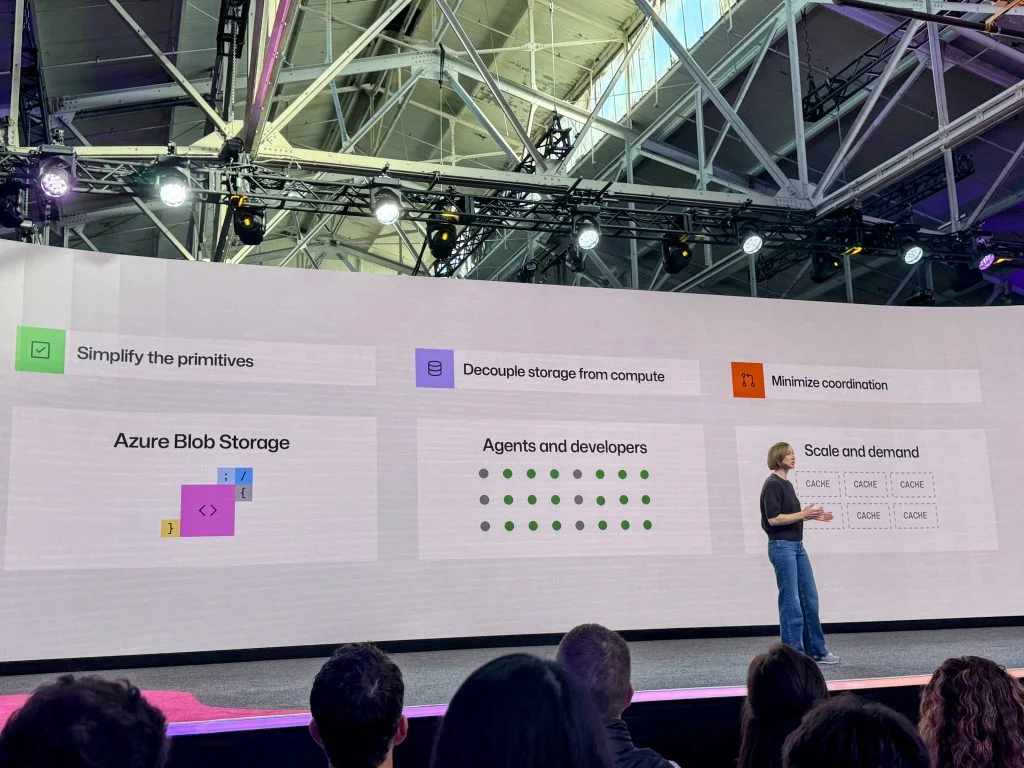
A key architectural decision is to separate compute from storage in GitHub’s Git infrastructure. That lets the company scale each independently as demand changes by time of day, user group or product. Parikh said moving from GitHub’s own data centers to Azure adds capacity, geographic reach and redundancy that its fixed facilities cannot provide. Work continues on other areas, including scaling and hardening GitHub Actions.
Keeping repositories accessible
The architecture work also has implications for GitHub’s approach to free repositories. Daigle said lowering the cost of storing Git data can help the company keep repositories available as developers—and their agents—produce more code.
He described access to a repository as part of GitHub’s relationship with its community. Restricting developers to only a small number of private repositories would violate what the platform has come to represent, he argued. Whether someone has years of experience or is just beginning, their work should have a place beyond a laptop or a file passed among friends.
That commitment has limits. Daigle distinguished the cost of repository hosting from the expense of supplying AI models. GitHub can’t promise unlimited free model tokens to everyone, he said, and has had to make choices about which access to subsidize.
Git and verification face their own changes
Daigle also sees room to improve the tools built around Git. He proposed working with the developer community on a higher level “porcelain” interface that could make Git’s underlying system easier to use. Some of Git’s foundations, he said, made less sense even before agents arrived; their limitations are now more visible. Still, he wants evidence that a replacement is needed before moving away from Git itself.
The next constraint may come after code is written. Software still needs review, testing, security checks and a decision about whether it is ready for production. Daigle expects that verification work to become a bottleneck as agents increase the volume of proposed changes.
Running every build for every agent commit won’t necessarily help. If a developer has five or ten agents working at once, Daigle said, they may not need a full build for each step. That calls for changed habits among both people and agents. He raised options including signing builds run locally, choosing a smaller set of relevant tests and exploring proof driven development.
The right verification mix depends on what the software does. Daigle made the point with an automotive example: a manufacturer wouldn’t ask an agent to decide whether a brake caliper was engaged. More agent activity will therefore make trusted review and testing practices a central part of developer infrastructure. GitHub’s rebuild is as much about that shift in responsibility as it is about adding cores and storage.
The post “I don’t think the world needs a new GitHub”: What GitHub’s leaders really think about their new rivals appeared first on The New Stack.