Una Fitness Watch Review: USB-C Charging and Repairability Meet Room to Improve
The Una watch makes a practical case for a less disposable fitness tracker: it charges through a standard USB-C port, has parts you can replace, and leaves room for users to build new software. Those choices give it a clear identity at $199. In testing, though, its heart rate readings were inconsistent, and its deliberately limited feature set won’t suit everyone.
After wearing a review unit for several weeks, my read is that Una has made a promising first watch for people who value repairability and simplicity. The hardware and software aren’t polished enough to make it an easy recommendation for the average fitness watch buyer, but the underlying idea is compelling.
USB-C is the feature that makes the pitch tangible
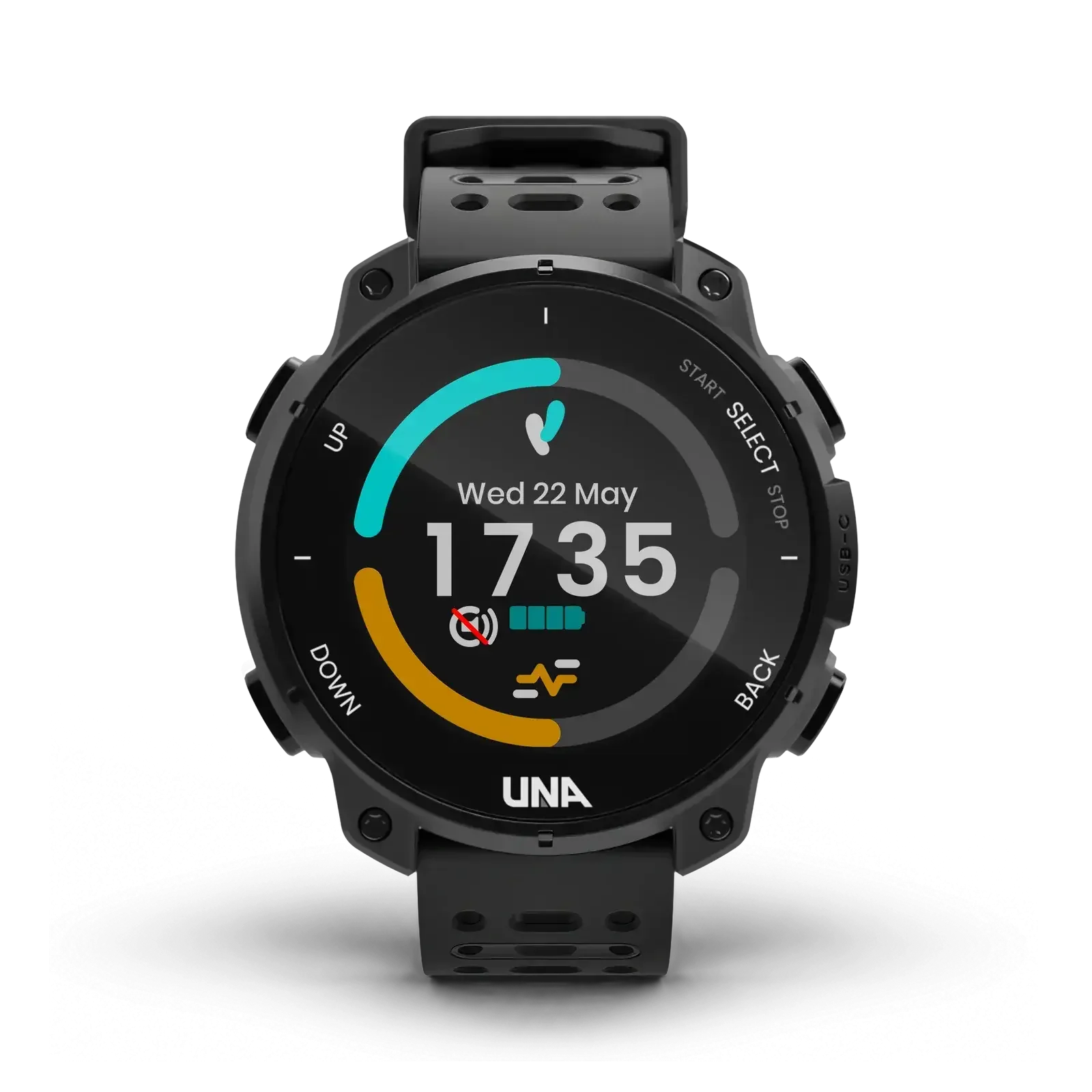
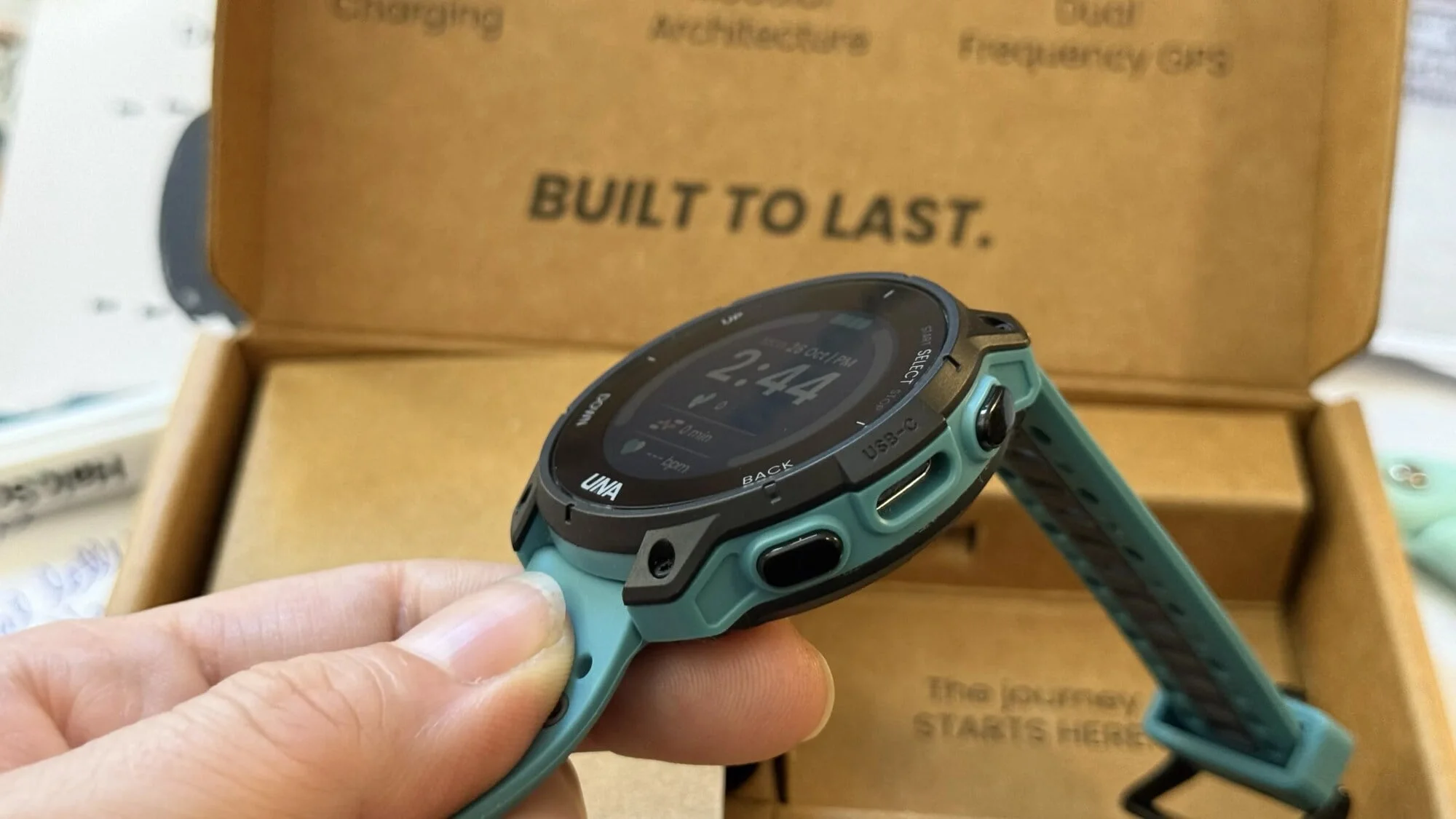
The first detail that caught my attention was the charging port. Una puts a standard USB-C socket on the side of the watch, so a regular cable works; there’s no proprietary connector or magnetic puck to keep track of. That’s a small change with an outsized everyday payoff, especially for anyone who has collected charging cables for multiple devices.
The watch is also designed to be opened and repaired. Small screws are visible around the face and back panel, and Una sells a replacement battery for $40 and a screen for $50. The company sells the small screwdriver needed for the job, too. This won’t make every owner a watch repairer, but it gives the “one watch for life” idea a physical basis: key components can be replaced instead of treating the entire device as disposable.
Una began appearing online about two years before shipping started this summer. The review unit I wore reflects an early product, with plenty of room for the hardware and software to develop. The MIP display is an older screen technology with a devoted following; it’s easy to read in bright sun, and its backlight is adequate indoors and after dark. It won’t look as vivid as the AMOLED screens many buyers now expect, but it’s a sensible match for a watch that favors legibility and restraint.
Fitness tracking stays focused
Una’s app covers daily steps, activity, floors climbed, and average and resting heart rate. During a run, the watch records pace, distance, and heart rate, then presents the workout data afterward. It also sends activity data to Strava reliably and displays simple bar charts that make day-to-day changes easy to scan.
That narrower scope may be a selling point. Plenty of wearables try to turn every metric into a score or prediction. Una sticks closer to familiar exercise data, and it doesn’t come with sleep scoring or claims about how quickly a person is aging. For someone who wants a watch to track runs without filling the day with prompts, the restrained approach feels deliberate.
The tradeoff is clear: buyers accustomed to sleep tracking and other convenience metrics will find gaps. The watch also has only a small set of built-in workout profiles. You can record a run or a general workout, but strength training wasn’t available as a dedicated activity until an add-on app filled that hole.
Open software gives the watch room to grow
A small app store lets users add watch faces and features, and the available apps are free as far as I could tell. HabitLab, for example, asks about alcohol, cigarettes, late meals, and other habits in the evening, then asks how the user feels the next morning. It also records overnight HRV and resting heart rate, despite sleep tracking not being a standard watch feature. The goal is to connect those answers with the overnight measurements over time, in a way reminiscent of Whoop’s journal analysis. I haven’t used it long enough to assess how useful those correlations are.
Gym Sets adds a strength training mode. Select it in place of “Run” or “Workout,” and it tracks heart rate while providing a timer for sets. These are modest additions, but they show how outside developers can expand the watch beyond its original activity list.
The store is still sparse, and its apps don’t match the range of features available for Apple Watch or more established platforms. That’s unsurprising for a product that has only been shipping for a few months. More meaningful for its future is that Una makes its software development kit and circuit board designs available to download and build on. That openness could help the watch gain features through its community, though the size and quality of that ecosystem remain unknown.
GPS is usable; heart rate needs more work
The GPS performed reasonably well on both road and trail runs. Its recorded route followed the path I took, and the distance totals were plausible. A newer Garmin appeared more precise, but Una’s GPS was usable for tracking a workout.
Heart rate is the weaker part of the experience. Early readings were so poor that I contacted Una before finishing testing. A firmware update arrived during that process, and installing it improved the results substantially. Anyone buying the watch should update it to at least version 1.6.0.
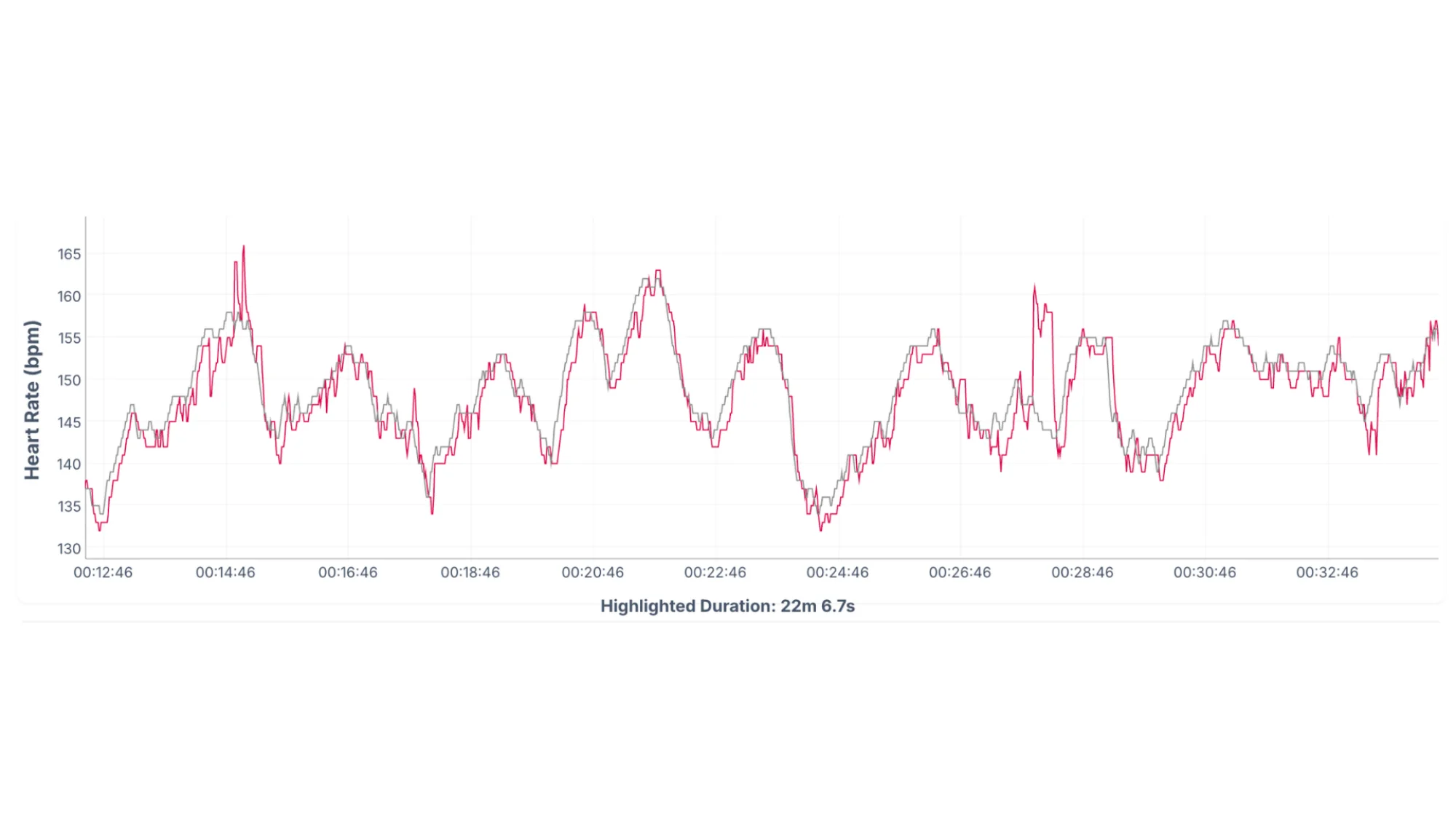
Even after that fix, I’d describe the sensor as adequate rather than accurate. Its readings often followed the same broad rises and falls as a chest strap, but it also produced sharp spikes that the strap didn’t show. In one run, the Una briefly reached about 165 beats per minute while the reference reading was 155. Later, it reported roughly 160 as the actual rate hovered near 145 and was dropping. Similar discrepancies appeared in other workouts.
That matters because heart rate is a core feature for runners who use workout data to judge effort. Garmin and Apple have raised expectations for wrist based readings, and Fitbit is also competing in this space. Una doesn’t need to match every premium watch feature, but the sensor needs to earn more trust before this becomes a straightforward choice for training.
A promising first release with a specific audience
At $199, Una sits above the Fitbit Edge at $179.99 and below the Coros Pace 4 and Garmin 70, both listed at $249. Those watches offer more features and activity options. Una’s appeal depends on whether the buyer values its replaceable parts, USB-C charging, open development, and minimal interface more than a broader set of fitness tools.
That combination could work well for developers, people who want repairable electronics, and anyone tired of proprietary charging accessories. The MIP screen and limited menus will also suit buyers who prefer a quiet, functional watch to a bright display crowded with features. There’s no AI feature set to navigate, and the app doesn’t appear to require a subscription.
For someone shopping for a basic fitness watch without a strong interest in repair or open software, the case is less convincing. Heart rate quirks may frustrate regular runners, the screen can feel dated beside AMOLED, and the lack of sleep tracking leaves out a feature that has become common elsewhere.
Una has made a watch with a recognizable point of view, and the first release gives that idea a credible foundation. Its next steps will matter: improved heart rate performance, replacement components, and useful additions from developers could make the hardware more compelling over time. The longer test will be whether Una can keep the product repairable and uncluttered while continuing to support it.