Entire’s Trails Reworks Code Review Around AI Agent History and Evals

Entire’s central bet is that AI coding agents are changing what a code review needs to examine. The startup, founded by former GitHub CEO Thomas Dohmke, launched a GitHub alternative on Monday with Trails, a review system that brings an agent’s development history and the original request into the same view as its code.
The product reframes review as an ongoing evaluation loop. Agents produce changes, automated checks assess them, and developers can inspect the results or direct another revision. That approach addresses a problem Dohmke described at the Linux Foundation’s AGNTCon + MCPcon in San Jose: agents can generate so much code that a developer may struggle to understand what a pull request contains.
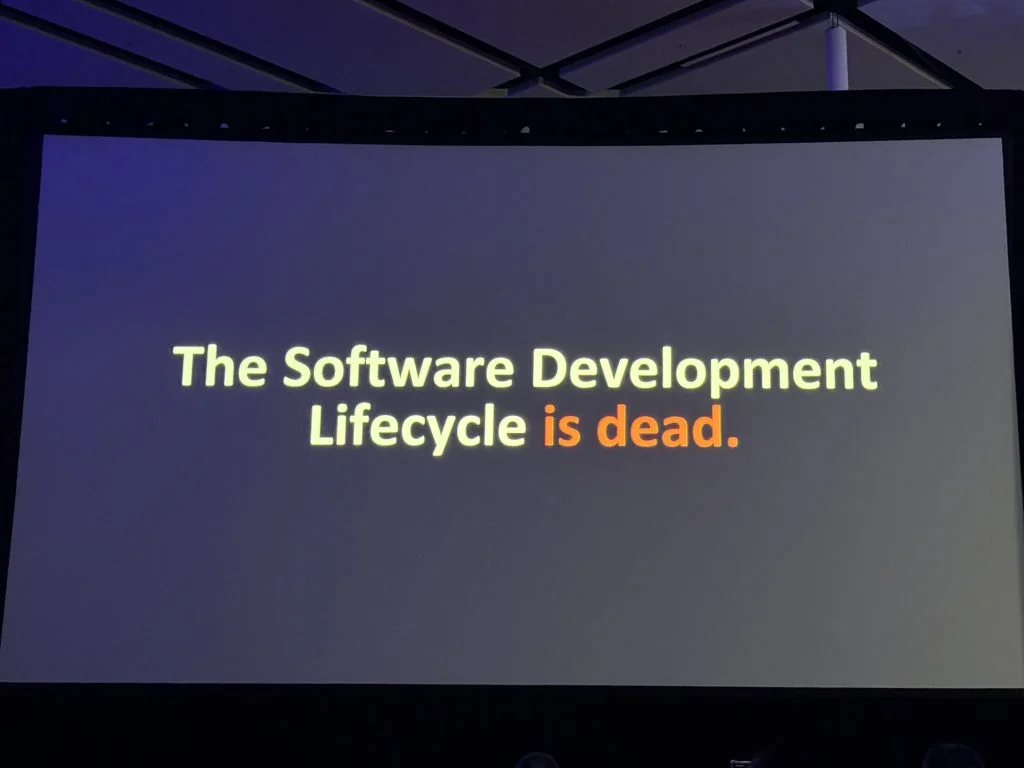
“It’s exciting for us because what we set out to do a year ago is landing now,” Dohmke told The New Stack at the event. He described Entire’s goal as connecting Git hosting and infrastructure with continuous integration, delivery and memory, then adding Trails as its take on the pull request.
“It’s exciting for us because what we set out to do a year ago is landing now.”
Trails makes agent work part of the review
Trails presents changes in a dashboard built around configurable evaluations, or evals, scored by agents. Teams can use them to assess qualities such as change risk or whether a long coding session has drifted from the developer’s original intent. Entire says the evaluations run with every push, with results available in its web interface and open-source command-line tool.
That feedback can guide the coding agent through another round of changes, while the developer checks its progress. The resulting review connects three things that a conventional diff can leave apart: the request that started the work, the agent’s session history and the code it produced. The design makes the reasoning and course corrections behind a change visible alongside the final patch.
That distinction matters because GitHub already offers agentic code review through Copilot. Entire’s approach reaches beyond adding an automated reviewer to a familiar pull request: it treats the context behind the code as review material in its own right.
The intended payoff is a review process that can direct human attention toward uncertain or risky changes. Entire’s premise is that teams may be able to merge when configured evals pass with high confidence, without asking someone to inspect every line in equal depth. That shifts the reviewer’s role toward setting expectations, checking the signals and stepping in when the evidence calls for it.
Developers get preset review agents, and can define their own configurations in a JSON file. The supported model choices include Claude and OpenAI models. Entire also says it’s working with Buildkite and Depot on continuous integration: teams can convert existing GitHub Actions workflows with Buildkite’s bk pipeline or Depot CI, then connect the repository to Entire.
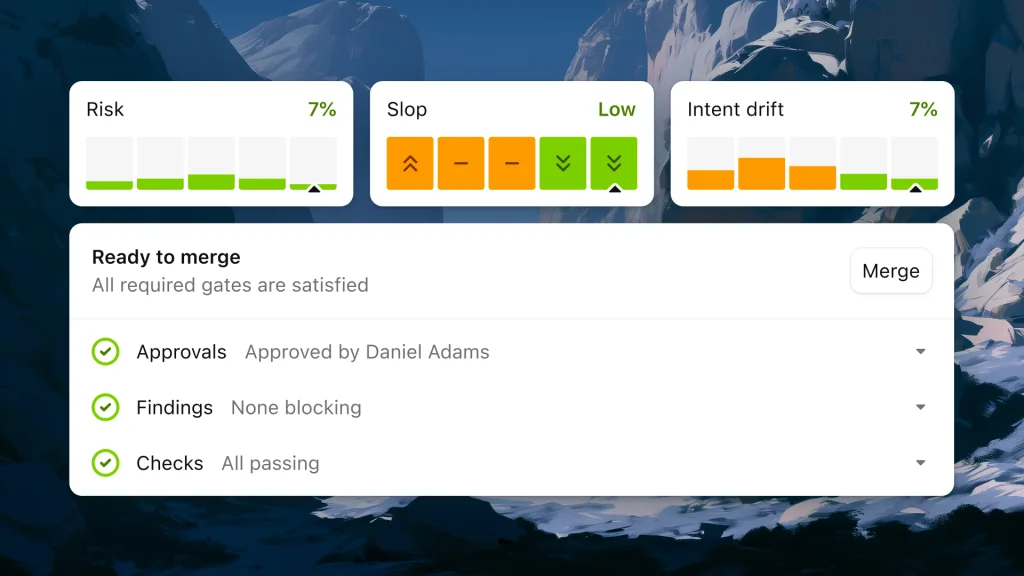
Dohmke described the interface as a kind of “head-up display” for developers, highlighting the status and confidence of evaluations. He said he sometimes follows agent work from home, opening Trails shared by teammates in Slack and messaging his own agents. One internal evaluation he called “stop cop” can help inform a merge decision when it returns green with high confidence. That’s a view of code review as supervision over a stream of agent work, rather than a single handoff at the end.
“We’re redefining how the developer lifecycle works, and it’s really cool. I’ve been at home in the evenings, sitting on my couch, and texting my agents — all the while getting links from my team to their Trails on Slack and opening them.”
Git hosting built for distributed teams
Trails is the launch headline, but it sits on top of Entire’s Git-compatible source control server, which the company introduced earlier in the summer. Entire claims pushes can be up to 89 times faster than GitHub and six times faster than Cursor’s Origin. Those are company-reported comparisons; the practical value will depend on teams’ repositories and working patterns.
The hosting service supports private repositories at launch. Entire says organizations can select a primary region and add mirrors in other locations, with synchronization handled by the service. Available regions are the United States, Europe, India and Australia. Public repositories and self-hosted Git nodes remain on the roadmap.
Regional hosting and mirrors give the platform a distributed footprint, while letting a company choose where its primary repository lives. For teams working across locations, that setup also ties source control to the same service that runs review evaluations and stores agent context. The launch is therefore a broader platform move, not simply a new interface for inspecting code.
Persistent memory carries decisions between sessions
Entire’s third component, Continuous Memory, stores AI agent sessions in a project’s repository and makes them available to agents working on future tasks. The history can preserve more than successful implementation details: it can also capture rejected approaches and moments when a developer explained that working code still missed the mark.
The company describes the system as a combination of a codebase graph, which helps agents locate relevant parts of a project, and an “agentic brain” that turns prior sessions and prompts into searchable memories. In practice, the goal is to give an agent access to decisions and explanations that would otherwise be lost when a session ends.
That memory could make Trails’ review context more useful over time. An evaluation can assess a change against the request, while stored history may help an agent understand project conventions or earlier decisions before producing the next revision. The platform links code generation, review and accumulated project knowledge into a single workflow.
Pricing and the cost of agent review
The platform is free to use, according to Dohmke, with customers paying for the tokens consumed by review agents. Entire is giving users $100 in starter credit; after that, users pay market rates for their chosen model. Because the evaluations rely on language models, the cost of repeated reviews is part of the product’s operating equation.
Dohmke expects agent-run costs to become a constraint for engineering teams, alongside the productivity gains that agents promise. He argues that reusing an existing open-source project or a service can cost fewer tokens than asking agents to build a replacement. That makes persistent memory and targeted review relevant to both code quality and the amount of model work a team repeats.
Entire has said it is exploring ways to support open-source projects, and is discussing ideas with partners, including model vendors. The company began releasing pieces of the platform after announcing a $60 million seed round in February. Its Monday launch puts hosting, memory and Trails together as a direct GitHub alternative; public repositories and self-hosted Git nodes are still to come.
The near-term test is whether teams find the added context and configurable evaluations useful enough to change how they review agent-written code. If they do, the pull request may evolve from a code-only checkpoint into a record of what was asked, what the agent tried and how the resulting change performed.
The post Ex-GitHub CEO launches a GitHub rival that reinvents the pull request appeared first on The New Stack.
===