iFixit Teardown Maps iPhone Duo’s Hinge, Repairability and Screen Risks
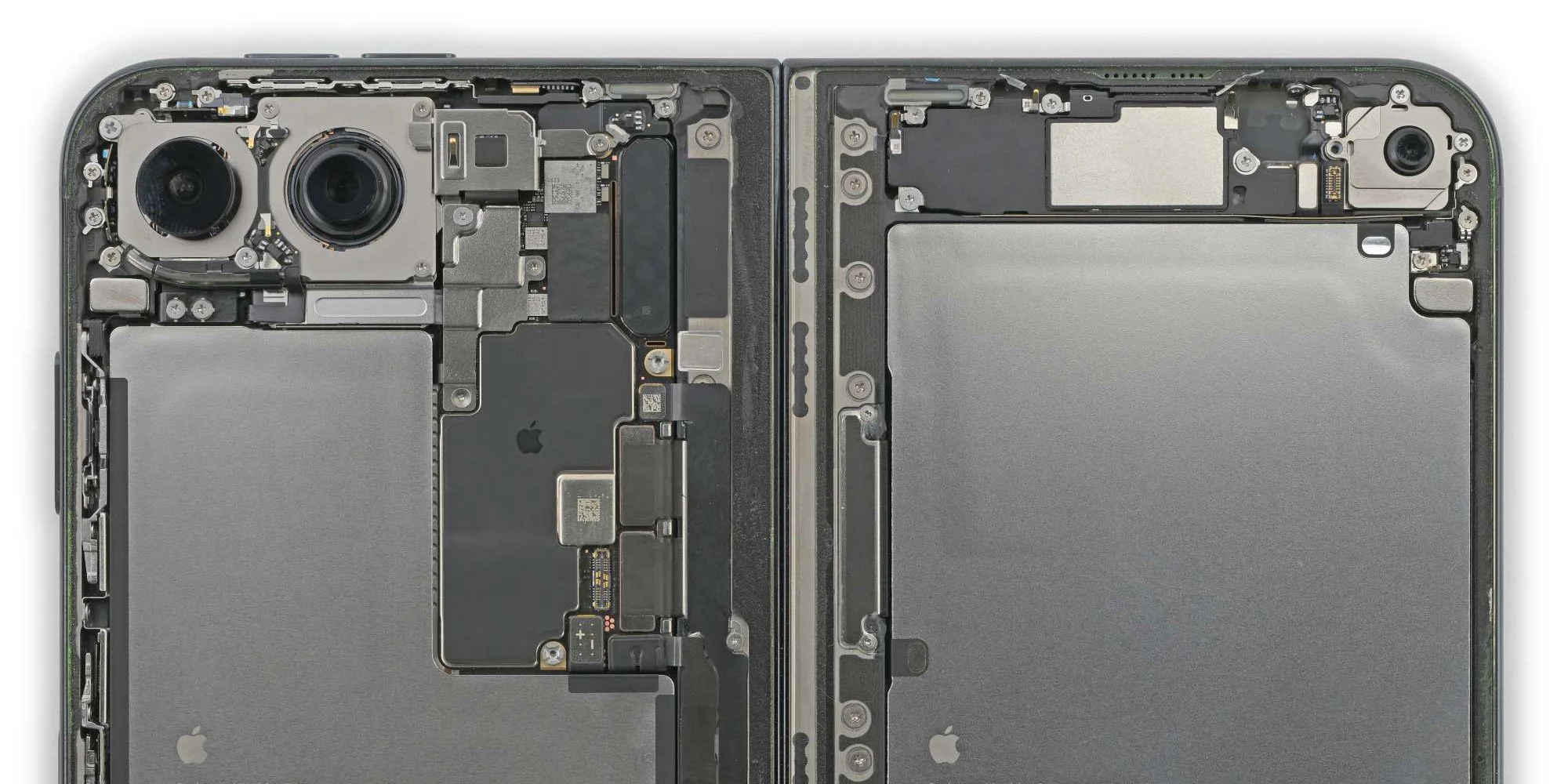
Apple’s first foldable phone presents an unusual mix of repair progress and mechanical uncertainty. In its teardown of the iPhone Duo, iFixit gives the device a provisional 5 out of 10 repairability score—the highest it has awarded a foldable—while identifying several hinge components that could help explain reports of damaged inner displays. The teardown raises plausible questions about those failures, but it doesn’t establish a cause.
The score is provisional because replacement parts aren’t yet available. Still, the device’s construction offers some early evidence that a foldable can be designed with repairs in mind. iFixit’s disassembly also reveals how Apple’s hinge, display layers and battery layout shape both the device’s engineering and the work required to service it.
The hinge balances motion, dust and display stress
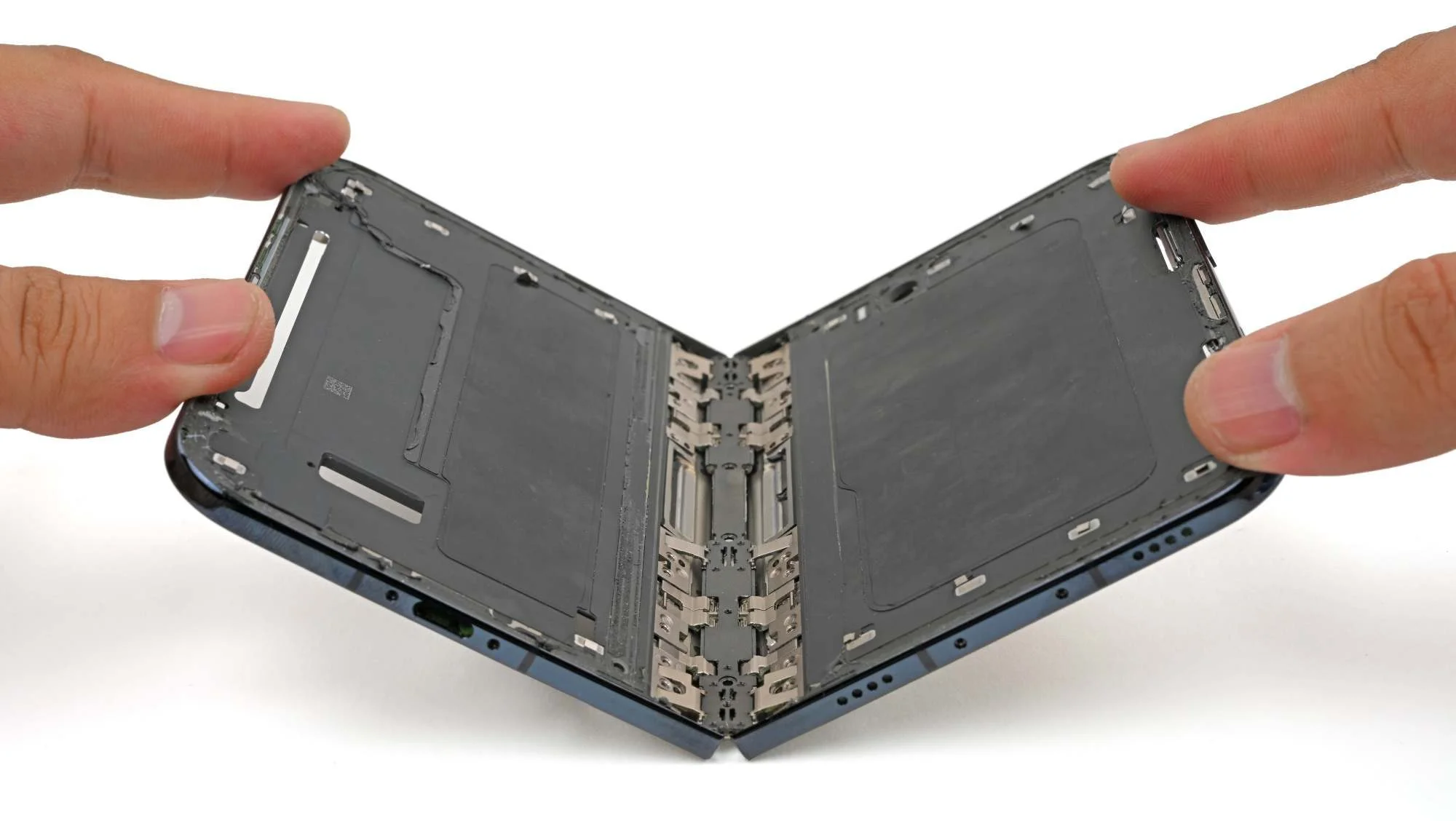
The hinge is the central engineering feature of the Duo, and iFixit’s inspection shows a more involved mechanism than Apple’s patent filings alone suggested. Gears, springs and linked metal joints work together with a waterdrop-shaped fold. That geometry gives the display room to bend across a broader curve instead of closing around a sharp crease.
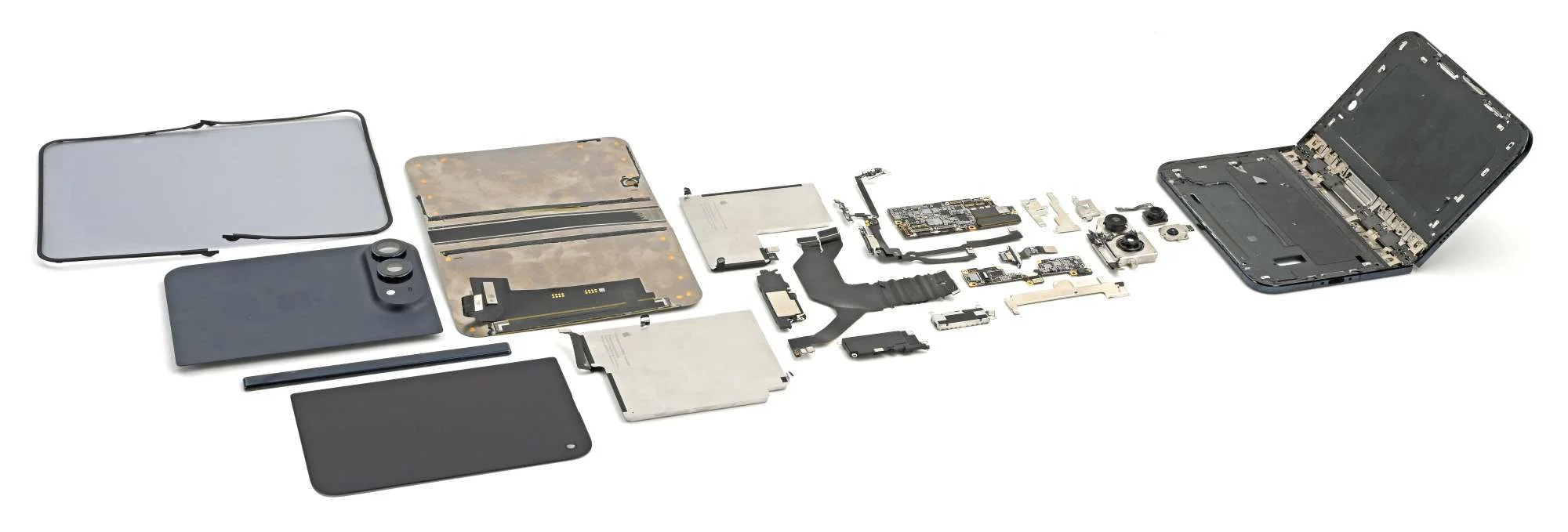
Apple also uses curved guides to control the hinge’s movement. Their job is to manage how the joints travel as the phone opens and closes, reducing stress on the flexible display. That design reflects a familiar foldable challenge: a hinge must move freely while keeping a delicate screen supported through repeated bends.
iFixit began its teardown with a fluorescent dust test, tracking where particles moved during disassembly. The iPhone Duo carries an IP68 rating, which means it is rated for dust protection and submersion in water up to 6 meters deep for 30 minutes. After the test, the hinge made crunchy sounds. Yet the teardown found relatively little dust inside it compared with other foldable phones the team had examined.
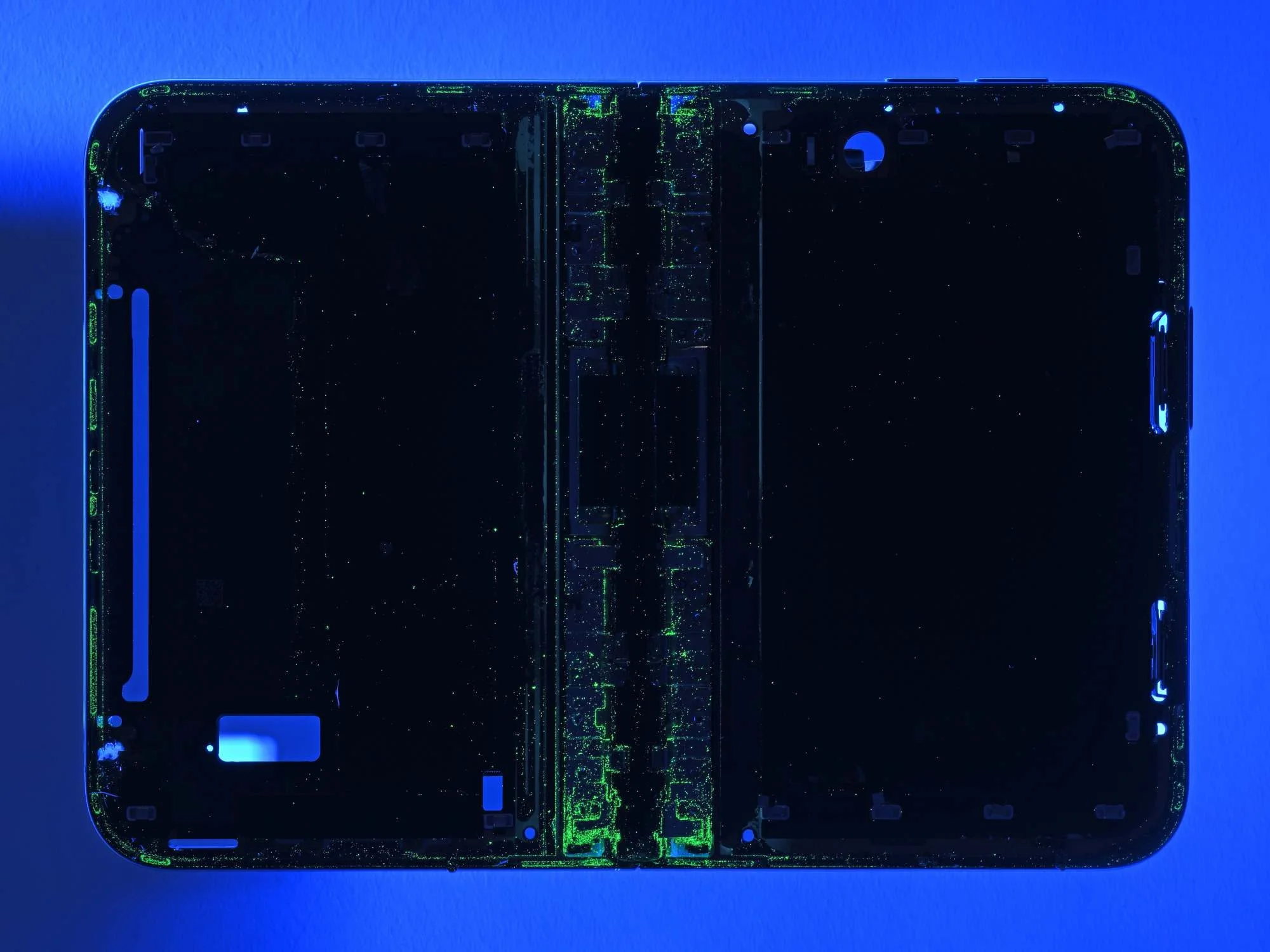
That combination is a useful reminder that a noise during testing doesn’t, by itself, show how much debris entered the mechanism or whether the phone has a durability problem. The teardown documents what happened in this particular test; it doesn’t establish how the hinge will perform over time in everyday use.
Hinge geometry offers leads on reported screen damage
Some iPhone Duo owners have reported a crunch while folding or unfolding the phone, followed by bright lines across the inner display. The reported damage appears to cluster near the boundary between the opening for the cable linking the two halves and the central hinge support, according to the source’s account of those reports. iFixit used CT scans, teardown footage and Apple patents to build a 3D model of the hinge and examine possible sources of stress.
One possibility is that a central support bar doesn’t retract as the phone closes. If it remains in the wrong position, it could press against the display. A second possibility concerns the curved rails that guide hinge movement: they rise above nearby components while the device folds, creating a potential point of interference if their movement doesn’t follow its intended path.
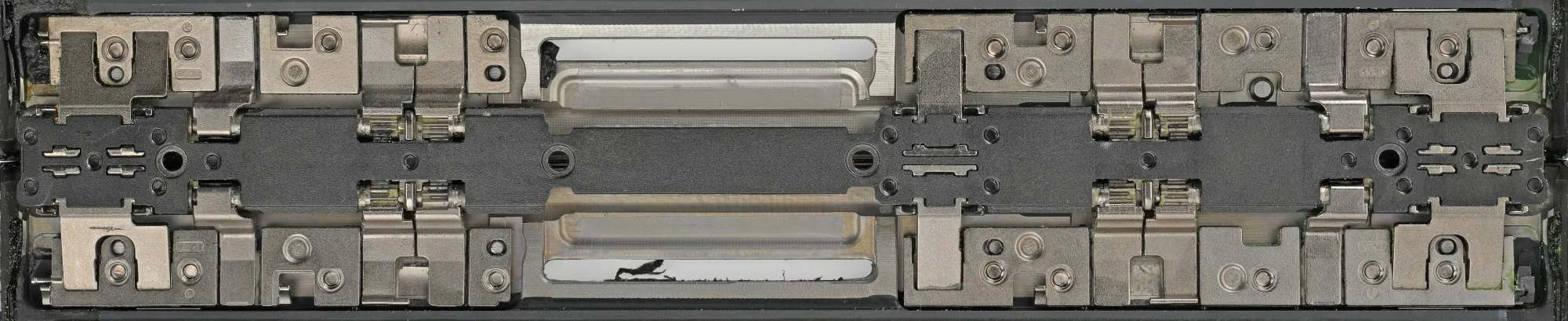
The area also brings several structural edges and parts together. That concentration could matter because force applied at a narrow point may put more strain on the screen’s layered construction. These are hypotheses based on the hinge’s layout, not confirmed explanations for the failures. iFixit’s findings point to places for further investigation, but the teardown doesn’t show that any individual component is defective.
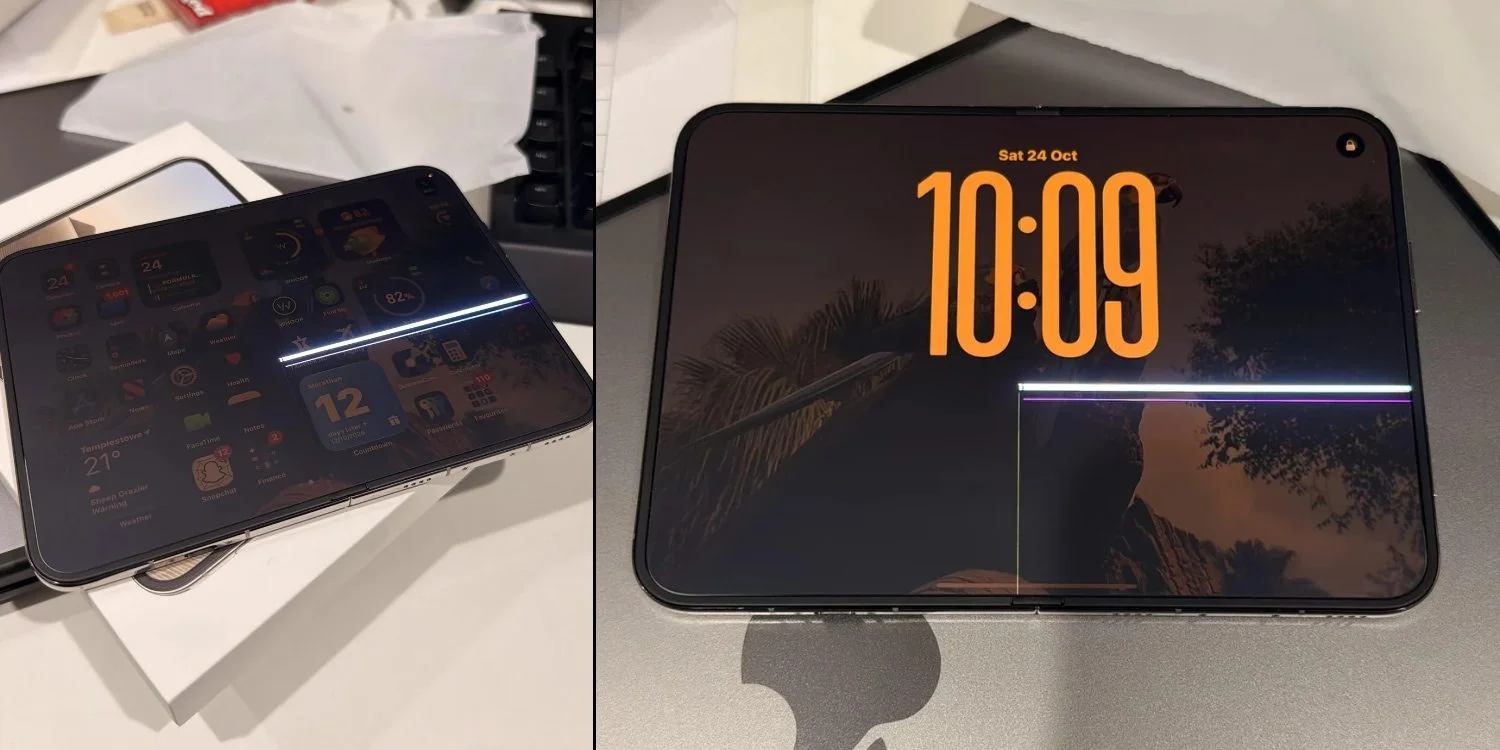
A reader comment in the original source offers another possible factor: how someone presses the display while closing the phone. The commenter says pressure near the damaged area could contribute, and contrasts the foldable display with hardened glass on the iPhone 18 Pro. That’s an individual observation, not a finding from iFixit’s analysis, and the teardown doesn’t determine whether user-applied pressure accounts for any reported failure.
For now, the most concrete takeaway is the location of the reported damage and the nearby hinge features that might place stress on the display. More evidence would be needed to connect those observations to a specific failure mechanism.
Display details aim to make the crease less visible
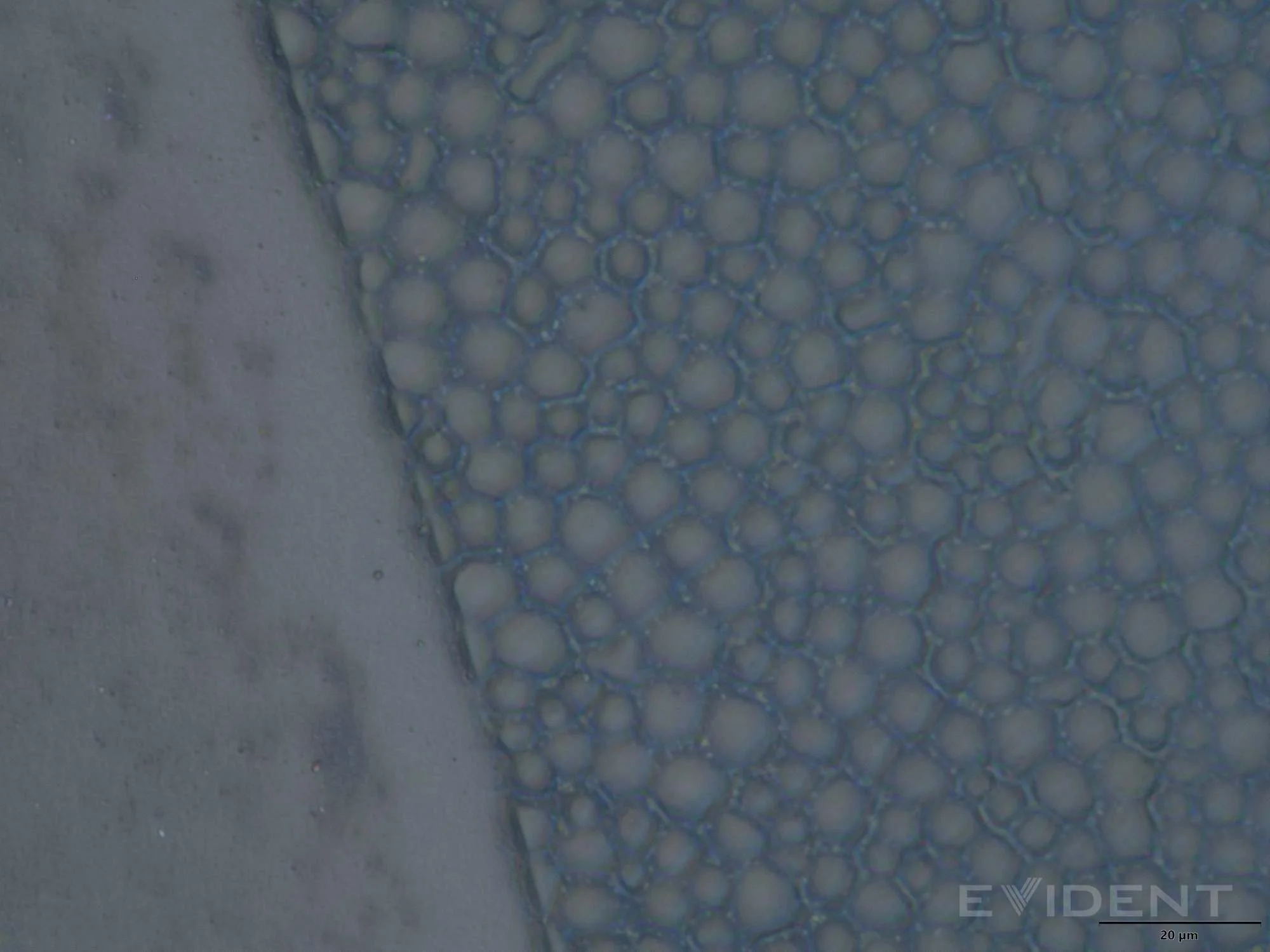
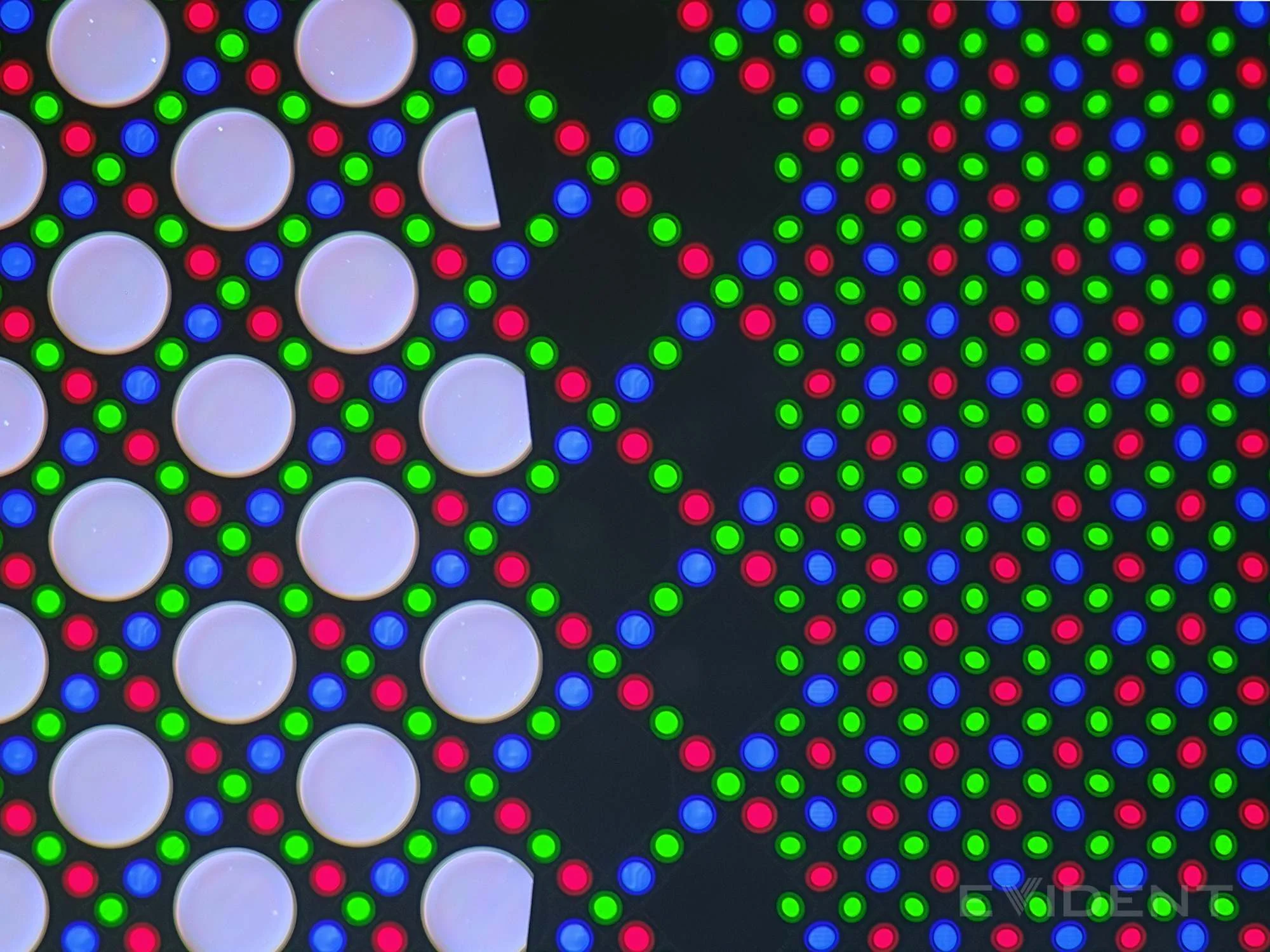
The teardown also examines the Duo’s matte nano-texture display. Apple says its surface scatters reflected light to disguise the crease. Under a microscope, iFixit found tiny rounded bumps that diffuse reflections. The approach changes how light reaches the viewer, making the crease less prominent without removing the physical fold in the panel.
The pixel pattern adds another layer to that optical work. Some subpixels are oval and point in different directions rather than following one repeated orientation. iFixit connects the pattern to an Apple patent that suggests this arrangement could reduce diffraction artifacts, which may help keep the crease less noticeable. The teardown shows the unusual layout; the patent provides a possible explanation for its purpose.
Around the inner selfie camera, the display uses a different pixel arrangement. Like the under-display infrared camera described for the iPhone 18 Pro, the Duo’s modified pattern leaves larger gaps to let light reach the camera below. In this region, the pixels also become rounder and more regularly arranged.
Repair access brings a more practical note. Clips hold the bezel around the inner display, allowing it to come off without breaking. The outer display is also relatively easy to remove, which matters because several internal repairs require taking it off first. Those choices contribute to the provisional repairability score and could reduce the risk of damaging parts during disassembly.
Battery design helps the repairability case
The Duo splits its battery across the two halves of the phone. One cell sits beneath the back glass; the other is beneath the outer display. Replacing both therefore involves opening both sides of the device. The larger cell is rated at 11.567 Wh and the smaller at 7.506 Wh, for a combined capacity of 19.073 Wh.
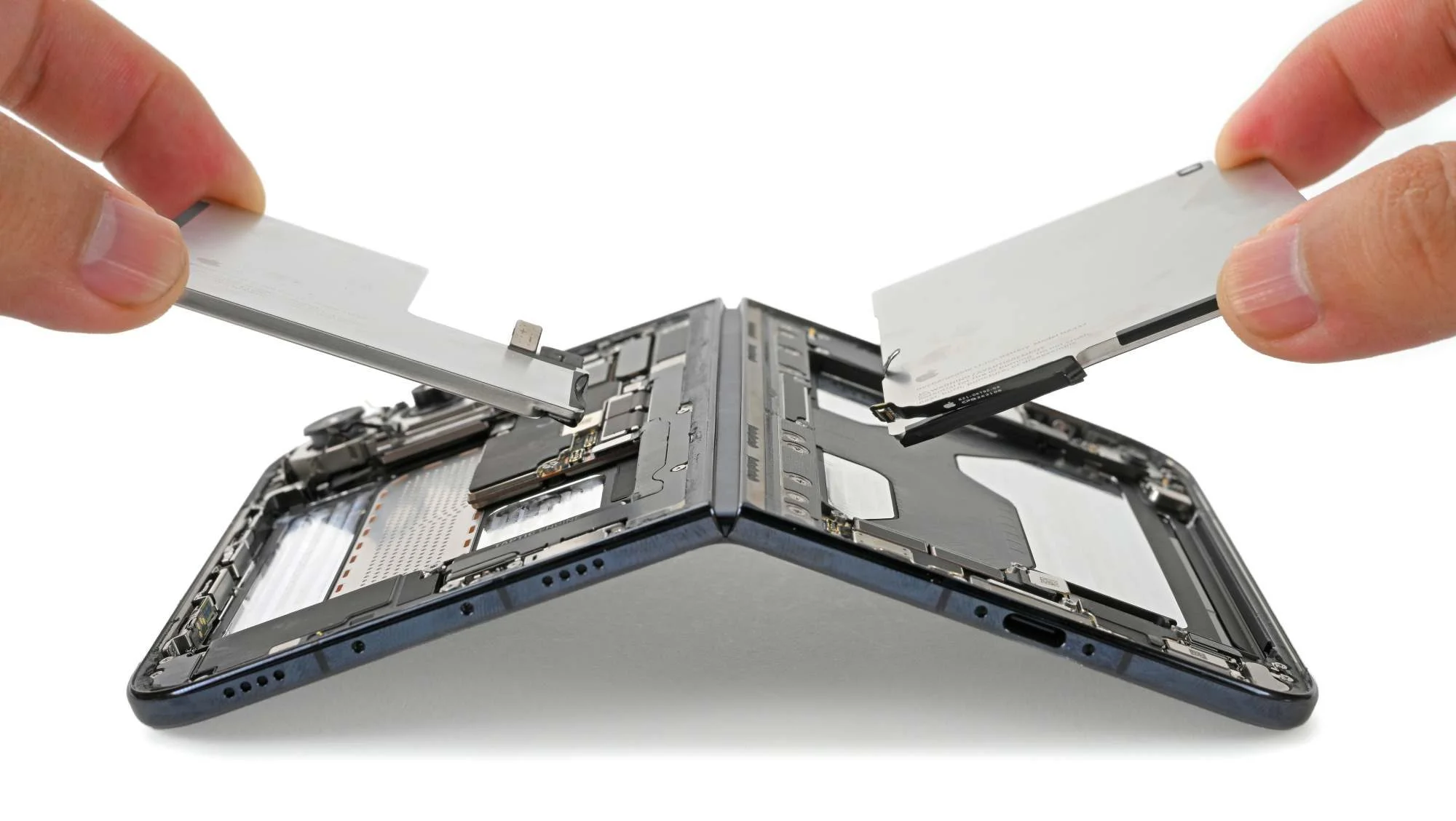
Both batteries use electrically releasable adhesive, which iFixit says can be activated to remove the cells without forceful prying. The team described the process as the best battery-removal experience it had seen in a foldable. That’s a notable serviceability detail in a device where access depends on removing screens and opening separate sections.
The teardown also covers the new logic board and the display’s multiple layers, which move independently as the phone folds. Taken together, the findings make the provisional 5 out of 10 score easier to understand: certain parts appear designed for less destructive removal, while the hinge and split battery layout still make repairs demanding. The key open question is whether the same hinge geometry that controls the display’s motion could also be contributing to the reported damage.
iFixit’s full teardown and analysis are available in its in-depth blog post. Its findings give repair technicians and device designers a clearer map of the Duo’s construction, while leaving the reported screen failures open for closer examination.