Apple’s iPod at 25: From 1,000 Songs to a 304 Million-Unit Era
The iPod’s lasting mark is bigger than its pocket-sized music library: it helped Apple build a business beyond the Mac. Twenty-five years after Steve Jobs introduced the player, its design choices and rapid expansion still offer a useful view of how Apple turned a focused device into a product family.
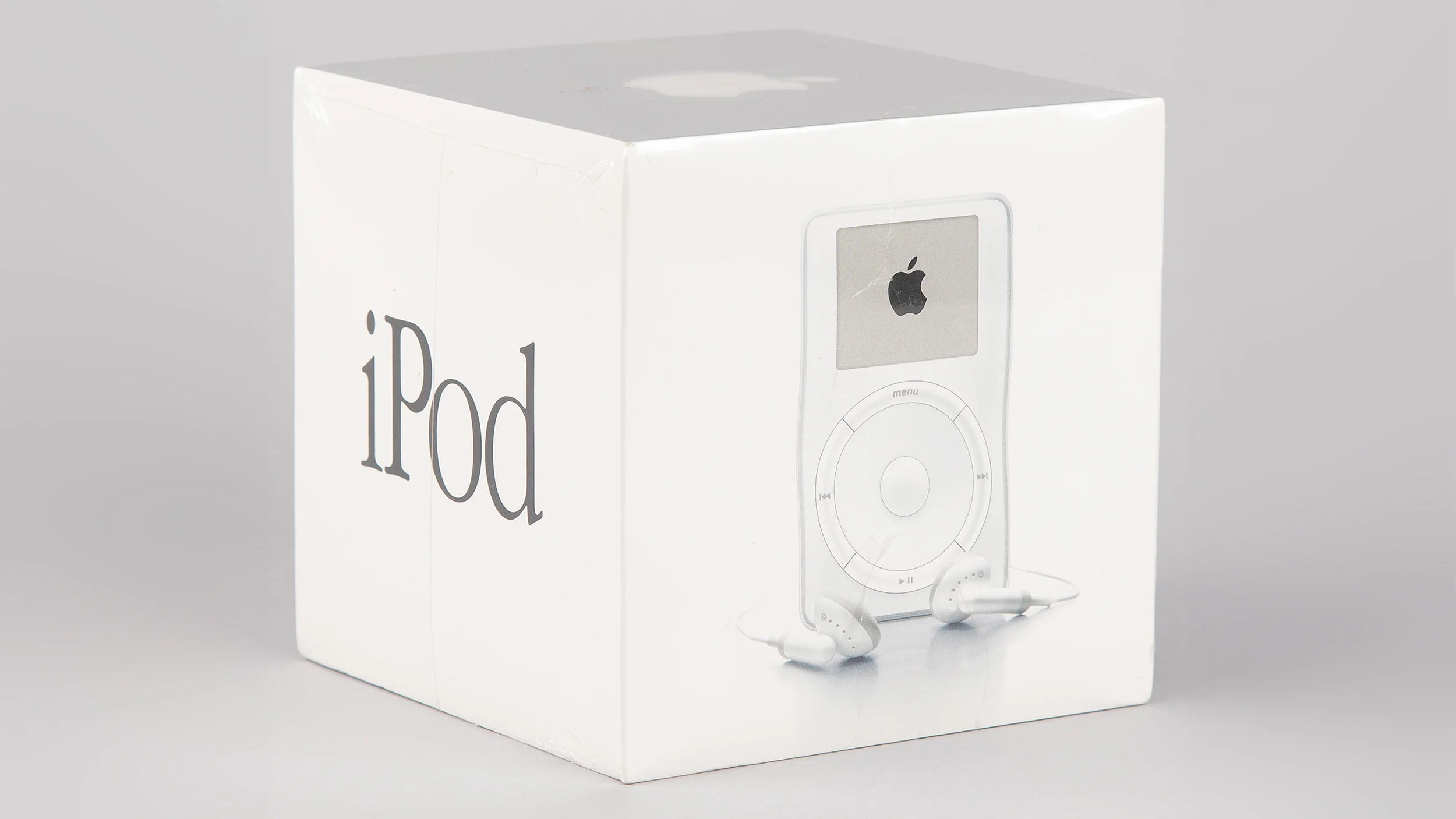
Unveiled on October 23, 2001, at Apple’s Town Hall auditorium at its Infinite Loop headquarters, the original iPod promised “1,000 songs in your pocket.” It packed a 5GB hard drive, monochrome LCD, mechanical scroll wheel and battery life of up to 10 hours into a $399 device that required a Mac running iTunes.
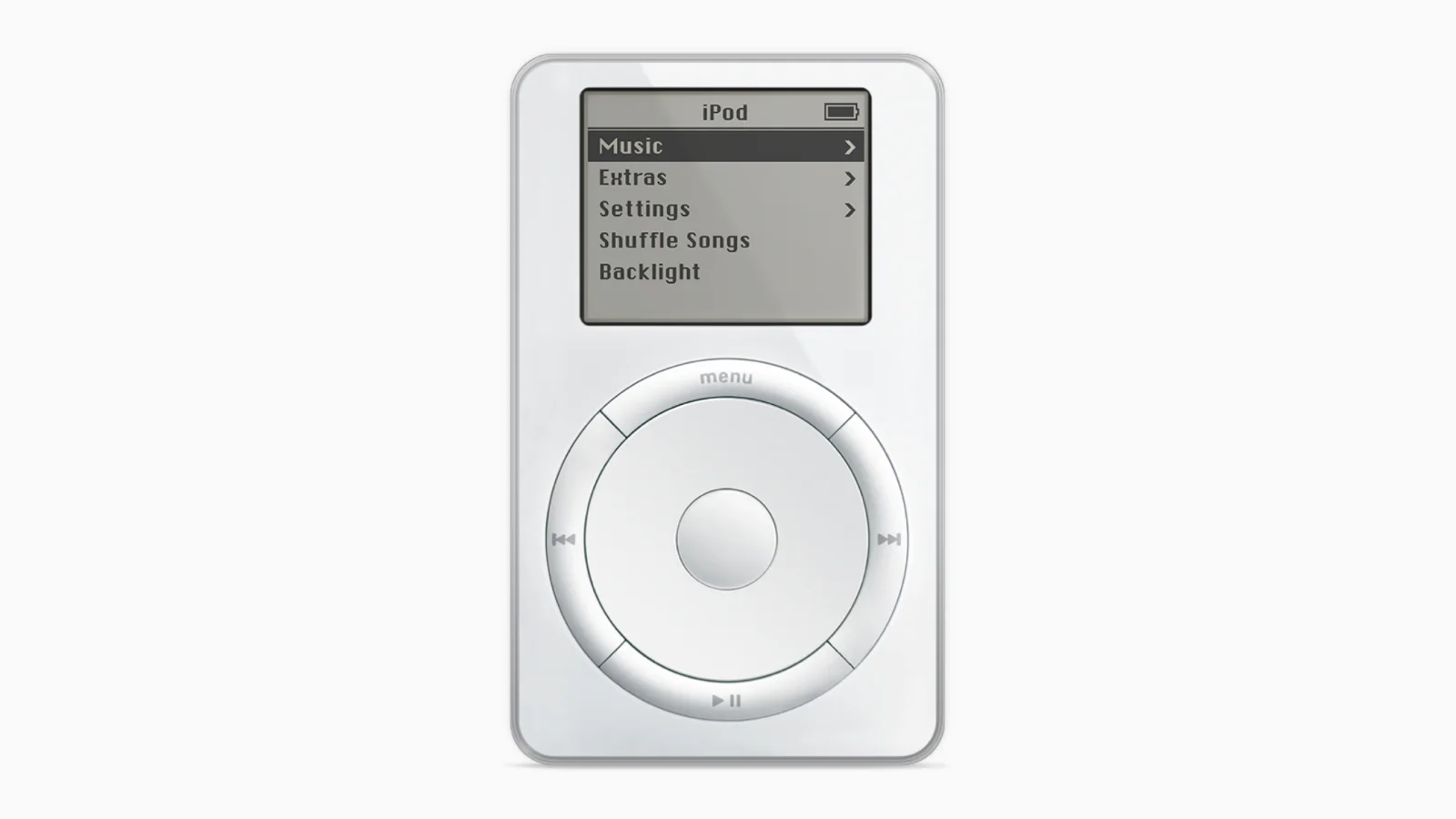
FireWire handled both music transfers and charging. iTunes automatically synced songs and playlists, and Apple said users could transfer a CD in under 10 seconds or 1,000 songs in less than 10 minutes. The drive could also hold documents and other files. For the time, the iPod was as much a tightly integrated computer accessory as a standalone player.
A debut met with skepticism
Apple had described the coming product as a “breakthrough digital device” and emphasized that it wasn’t a Mac. Before Jobs took the stage, speculation ranged from a music player to a home stereo accessory and a handheld with handwriting recognition. A MacRumors rumor roundup published two days before the launch even included the name “iPod.”
The initial reaction was far from unanimous. MacRumors’ launch-day coverage preserves reader doubts about the price, Mac-only support and the device’s significance. One called it “far from revolutionary”; another wondered, “all this hype for something so ridiculous!” Yet the iPod went on sale November 10, 2001, and readers reported lining up to buy one. Early owners also discussed fingerprints on its polished metal back, charging temperatures and sound quality.
From one player to a family
Apple moved quickly through hardware revisions. The second-generation model replaced the mechanical wheel with a touch-sensitive one. In 2003, the third generation brought the 30-pin Dock Connector. A color screen arrived on the full-size iPod in 2004, followed by video playback in 2005.
The iPod mini, announced in January 2004, gave the line its first smaller sibling. Its anodized aluminum case came in silver, gold, pink, blue and green, while its Click Wheel folded playback controls into the touch-sensitive surface. Apple carried that control scheme into the fourth-generation full-size iPod later the same year.
In 2005, the iPod shuffle stripped the player down further, dropping the screen. The iPod nano replaced the mini with a thin, flash-based design. Later nano generations added video playback, a video camera and a touchscreen; the square sixth-generation model, released in 2010, could be worn with third-party watch straps.
Sales showed how far the product had traveled from its Mac-dependent debut. Apple reported 100 million iPods sold by April 2007. At the device’s 10th anniversary in 2011, cumulative sales had passed 304 million.
The iPhone era and the final model
The iPod touch launched in September 2007, months after the first iPhone. Its 3.5-inch Multi-Touch display, Wi-Fi and Safari brought an internet-connected interface to the iPod line without requiring a cellular plan.
Apple’s other products gradually absorbed the player’s role. The iPod classic ended in September 2014, five years after its last hardware revision. Apple discontinued the nano and shuffle in July 2017, leaving the touch as the sole remaining model.
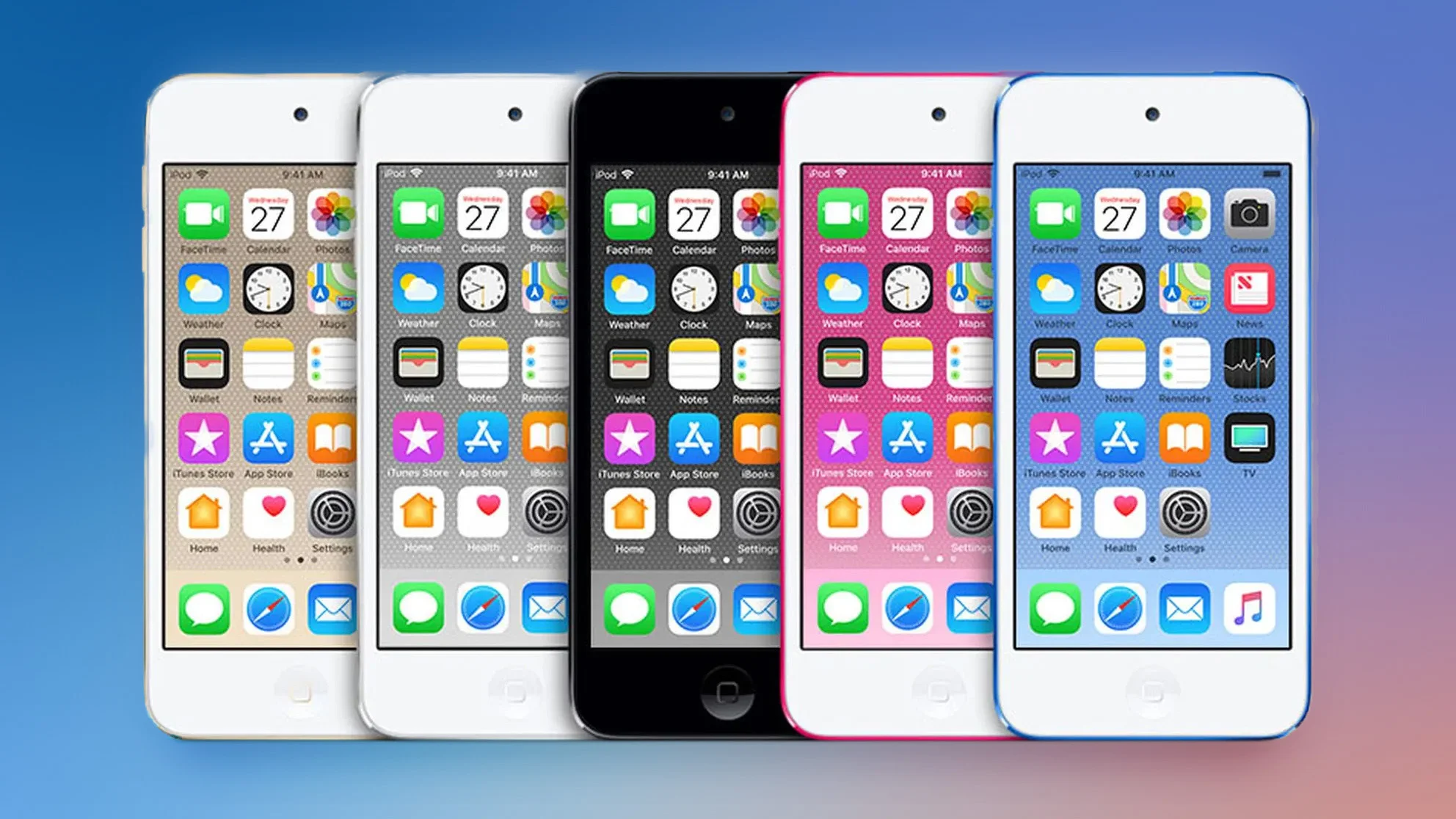
The seventh-generation touch added an A10 Fusion chip and up to 256GB of storage in May 2019, then stayed on sale without another hardware update. On May 10, 2022, Apple announced it was discontinuing the iPod touch, with stock available while supplies lasted.
Apple tied the decision to music playback spreading across its product range. In the discontinuation announcement, senior vice president of worldwide marketing Greg Joswiak said “the spirit of iPod lives on” in products including iPhone, Apple Watch, HomePod mini, Mac, iPad and Apple TV. The dedicated player is gone, but its central idea—music built into a device people already carry—has become standard across Apple’s lineup.
This article, "Happy 25th Anniversary, iPod" first appeared on MacRumors.com
Discuss this article in our forums