Top Laptop Recommendations for Everyday Users
Navigating the Laptop Choices: What Matters Most
Finding the right laptop can feel like a daunting task. For many, a laptop is not just a purchase—it's an investment often made with budgets that run into the thousands. You’ll likely have it for years, so the stakes are high. Having tested a broad spectrum of laptops—from budget-friendly Chromebooks to high-end MacBooks and powerful gaming rigs—I've got insights to share. My goal is to distill these experiences into recommendations that cater to various needs and preferences. Consider the Apple MacBook Air, which remains the benchmark choice for a wide audience. It’s not a blanket solution, though. If you need something more performance-driven for video editing or data-heavy applications, want to game on the go, or prefer a Windows environment, your options change considerably. There are solid alternatives worth considering, including versatile Chromebooks, the dual-screen laptop concept, and selections like the Microsoft Surface Laptop featuring the Snapdragon X Elite chip.Why the MacBook Air Still Reigns Supreme
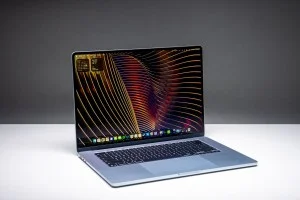
Apple MacBook Air 15 (2026, M5)
Score: 9
| Pros | Cons |
|---|---|
|
|
Where to Buy:
CPU: M5 (10-core) / GPU: M5 (8- or 10-core) / RAM: 16GB, 24GB, 32GB / Storage: 512GB, 1TB, 2TB, 4TB / Display: 13.6-inch or 15.3-inch Liquid Retina display, 2560 x 1664 or 2880 x 1864, 60Hz, no touch option / Dimensions: 11.97 x 8.46 x 0.44 inches (13-inch) or 13.40 x 9.35 x 0.45 inches (15-inch) / Weight: 2.7 pounds (13-inch) or 3.3 pounds (15-inch)
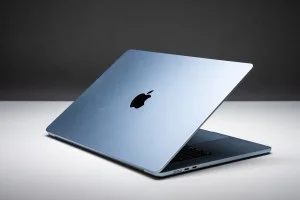
This latest iteration of the MacBook Air isn't a radical change, but it hits all the right notes. It's exceptionally thin and features an excellent keyboard alongside a responsive trackpad. The audio quality stands out too, particularly on the 15-inch variant. We’re talking about a gorgeous display and even a top-tier webcam. Coupled with outstanding performance and battery life that can stretch to about 13 hours, it remains a solid choice. Both the 13-inch and 15-inch versions excel at everyday tasks, making them perfect unless you require heavy-duty gaming or intense content generation. Many at The Verge still enjoy their M1 MacBook Airs from 2020, still running well after five years. That reliability makes the M5 Air—or even the M4, if you can snag a deal—a smart long-term investment.Apple MacBook Air 13 (2026, M5)
Where to Buy:
Read my full review of the M5 MacBook Air.
Affordable Options: For Students or Budget-Conscious Buyers
Apple MacBook Neo

Score: 9
| Pros | Cons |
|---|---|
|
|
Where to Buy:
CPU: A18 Pro (6-core) / GPU: A18 Pro (5-core) / RAM: 8GB / Storage: 256GB, 512GB / Display: 13-inch Liquid Retina display, 2408 x 1506, 60Hz, no touch option / Dimensions: 11.71 x 8.12 x 0.5 inches / Weight: 2.7 pounds
The MacBook Neo defies expectations. Most budget laptops are clunky and poorly made, but this model breaks that mold. Its solid construction outclasses other low-cost options. Despite being a smartphone chip, the A18 Pro processor offers a competitive edge in single-core performance, more than sufficient for daily tasks. While 8GB of RAM may seem restrictive, it performs decently unless you really push the limits with heavy apps or multiple browser tabs open.Read my full review of the MacBook Neo.
Let’s shift gears now to consider which laptops excel for those who prefer Windows...CPU: Intel Core i3-1215U / GPU: Intel UHD / RAM: 8GB / Storage: 128GB, 256GB UFS / Display: 14-inch IPS, 1920 x 1080, 60Hz, non-touch / Dimensions: 12.9 x 8.4 x 0.74 inches / Weight: 3.17 pounds
If you’re hunting for a reliable Chromebook without breaking the bank, the Asus Chromebook Plus CX34 comes highly recommended at around $400. Despite being equipped with an older 12th-generation Intel processor, it comes with 8GB of RAM and a standard 1080p display. It holds the “Plus” badge, ensuring it’s among the better choices in the affordable Chromebook market.
But here’s the kicker: Chromebooks are facing some uncertainty, particularly with the anticipated release of Googlebooks. While details are scarce, this looming competition adds a layer of complexity for potential buyers. Our previous champion, the Lenovo Chromebook Plus 14, remains a top-tier option; however, its price has surged dramatically from a reasonable $650 to as high as $800 and even $1,000. That’s a considerable hike, making it more difficult to justify. Unless you find a significant discount, you might just be better off looking at a MacBook Neo.